Singapore
Tuesday, January 16, 2018 – 09:43
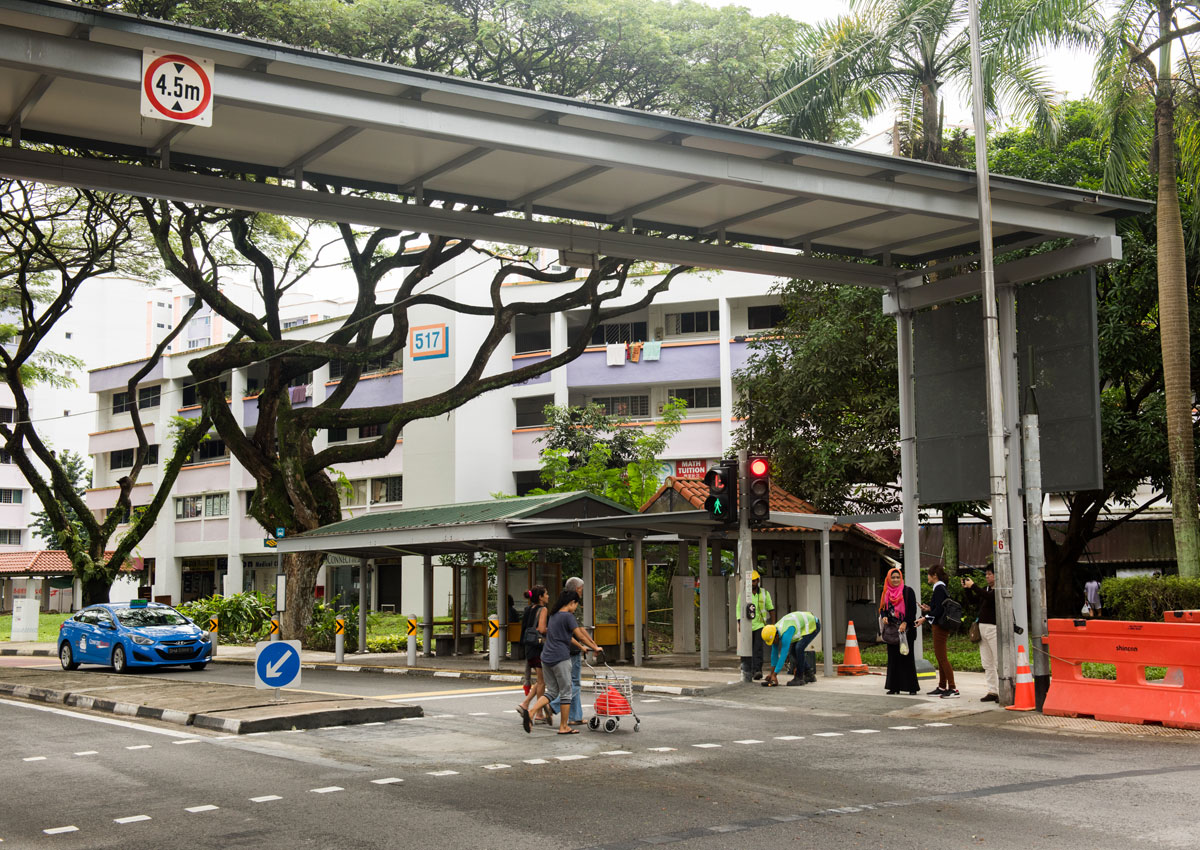
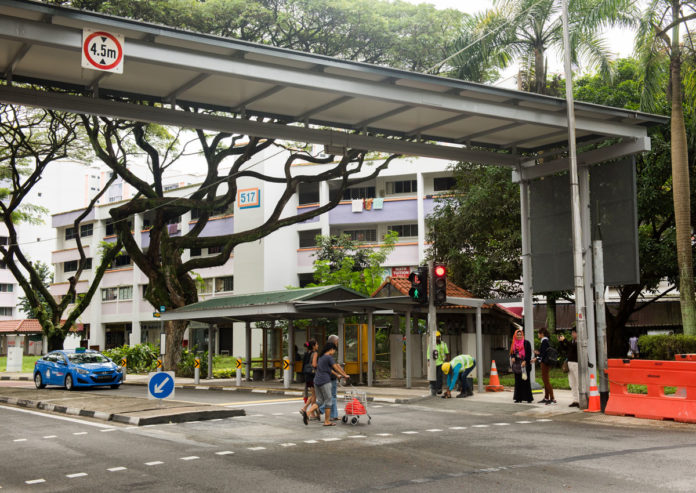
LTA clears up mystery of misaligned sheltered walkway in Jurong West
The Straits Times
Others
SINGAPORE: One of four lanes remains closed along Somerset Road after a pipe leak early Tuesday (Jan 16) morning, national water agency PUB said.
The agency added that it sent out a service crew to a location near TripleOne at Somerset Road near an open carpark after receiving a report of a pipe leak at about 12.40am.

Repair works taking place along Somerset Road to address a pipe leak. (Photo: Dennis Lim)
In an update on Facebook at 7.59am, PUB said that repair work on the pipe leak was still ongoing, and that one out of four lanes was temporarily closed to traffic.
In an earlier Facebook post at 6.41am, the agency said three out of the four lanes along the road were closed to facilitate repairs.
SINGAPORE: A new localised Chinese-language curriculum for pre-schools and kindergartens will be an additional option for pre-schools in Singapore to supplement existing resources, but those Channel NewsAsia spoke to pointed out that the materials they use are already rich in local culture.
The new curriculum, which was launched by Minister for Education (Higher Education and Skills) Ong Ye Kung on Jan 3, features scenes of Singaporean daily life that children can relate to, like experiences in an HDB setting. It also includes local stories and incidents, such as Sang Nila Utama’s founding of Singapura, the clean-up of Singapore River as well as the Bukit Ho Swee fire.
It was developed by the Confucius Institute of Nanyang Technological University (NTU).
The Confucius Institute’s director Neo Peng Fu had noted that materials used by some pre-schools are sourced from other countries, or may not be of high quality. He added that many of the textbooks are imported from China, Taiwan and Hong Kong.
PRE-SCHOOLS ALREADY HAVE LOCAL ELEMENTS IN THEIR MATERIALS
But it appears that pre-schools here already have a local element to their materials, particularly for those which are developed in-house.
For example, the in-house curriculum at NTUC First Campus, which focuses on developing children’s oral skills, requires children to have conversations with each other. This, said NTUC First Campus’s Group Mother Tongue Languages Officer Connie Lum, means that children have a choice to include what they know in the conversation. NTUC First Campus operates more than 130 My First Skool childcare centres islandwide.
“So if the conversation is about food, they can include things like chee cheong fun and roti prata,” she explained.
Dr Lum added that the teaching aids and picture books they designed also depicts backdrops like Gardens by the Bay and a local bus terminal. Multi-racial children are also featured in the picture books.
“A lot of people have the stereotype that only boys draw things like buses or cars,” she said. “But in one particular book, we show an Indian girl drawing a truck and a Eurasian girl drawing a bus.”
“So we teach children about multi-racialism indirectly through the picture books, and we also show that girls can also draw buses or cars. So we are quite unique in that way.”
The Chinese-language curriculum developed by NTUC First Campus. (Photo: NTUC First Campus)
Over at EtonHouse, which has children, family and teaching staff from all over the world, its director of pedagogy Tina Stephenson-Chin stressed the importance of giving children opportunities to engage in experiences and traditions from their own culture, as well as from different cultures.
“Alongside Singapore’s national celebrations, culture and way of life, our community also actively share traditions and culture from their home countries,” she said. For example, children may explore various local cuisines, and families may have a go at creating their own versions of nasi lemak or ice kachang.
“These experiences are conducted in Mandarin and hosted by the Mandarin teachers,” she added. “In one of our schools, children were inquiring on the different kinds of buildings and their functions.
“The Mandarin teachers took the chance to introduce local landmarks such as Marina Bay Sands, the Esplanade, Peranakan shophouses, various places of worship and museums.”
The local element is also evident in smaller preschools like Paya Lebar Methodist Church Kindergarten, which uses a curriculum named Le Zhong Xue, developed by a Singapore company and recommended by the Pre-School Chinese Language Education Support Group of the Committee to Promote Chinese Language Learning.
“The publisher invited teachers from China as well as teachers from Singapore to develop this curriculum in order to suit the Singapore culture and settings,” said the kindergarten’s Chinese senior teacher Teo Lee Kiang. “It is fully localised, especially in the ways that Chinese festivals are being celebrated in Singaporean style.”
“It has also been reviewed and revised in order to meet the needs of Singaporean children.”
Nonetheless, the various pre-schools do not appear to have ruled out the NTU curriculum entirely.
Paya Lebar Methodist Church Kindergarten’s principal Adeline Tso said that while she has yet to see the new NTU curriculum, they are “open to consider any programme that will be beneficial to our children”.
Likewise, EtonHouse noted that the books and resources developed in the curriculum could be used as reference and a value-add to its teaching and learning resources.
“We are open to sharing ideas with educators from all over the world and greatly appreciate intelligent approaches no matter where they are from,” said EtonHouse’s Ms Stephenson-Chin. “However, many of our children are not local and so it would not be practical to offer an only localised environment to our families.”
And when asked if they will consider using the NTU curriculum, My First Skool said it will need to know more about it.
A Chinese lesson in progress at an EtonHouse pre-school. (Photo: EtonHouse)
RESOURCES USED AT MOE KINDERGARTENS SHARED WITH THE REST OF PRE-SCHOOL SECTOR
However, already available in the pre-school sector are the materials developed by the Ministry of Education (MOE) for its 18 MOE Kindergartens (MKs). The curriculum, based on MOE’s Nurturing Early Learners Framework, develops children’s early literacy skills and seeks to nurture early bilingualism, with a focus on developing their listening and speaking skills through the use of songs and stories. All pre-school centres are invited to attend engagement sessions to check out MOE’s Big Books, which are used in English and Mother Tongue languages.
These Big Books, MOE told Channel NewsAsia, use contexts that children relate to, such as a walk in the neighbourhood, visits to Singapore landmarks like Changi Airport and Gardens by the Bay, as well as celebration of local festivals like Deepavali, Hari Raya, Chinese New Year and National Day. Anchor and partner operators, as well as non-profit operators, get the Big Books for free, while commercial centres get it at cost price.
A set of 24 Big Books in English and 32 Big Books for each of the three official mother tongue languages for K1 have been delivered to more than 800 pre-school centres which have indicated interest to use them, said MOE, adding that it has also started showcasing the use of these resources at pre-school forums.
Private operator Cherie Hearts is one pre-school that uses these Big Books, which it says adds literacy content to the classroom environment. Its Chinese-language curriculum, according to Noorsiah Allaudeen, head of curriculum at G8 Education Singapore, is developed by in-house curriculum specialists, and uses a “thematic-based integrated curriculum” encompassing the various learning domains of language and literacy, numeracy, discovery of the world, socio-emotional development, motor skills development and creative and aesthetic expression. G8 Education Singapore owns and manages Cherie Hearts.
Mrs Allaudeen also noted the local element is also embedded in the curriculum themes covered, especially during festive celebrations. “Chinese lessons are also brought to life when children go on field trips to places of attraction to learn about local culture and experiences,” she said.
She added that Cherie Hearts will also definitely consider using the new localised curriculum from NTU. “Our curriculum specialists will review its content and gauge the suitability and appropriateness, ensuring it matches our in-house materials.”
Nonetheless, it also taps on resources developed in places like China and Taiwan, because they have a “rich” source of Mandarin preschool teaching materials.
“As these countries have an abundance of highly qualified Mandarin educators and children’s book authors and publishers, G8 Education Singapore actively seeks out and uses the myriad of resources available,” said Mrs Allaudeen. “Similarly, we turn to the UK, US and Australia for English teaching materials.”
LOCAL GOOD, OVERSEAS BAD? IMPORTANT TO STRIKE A BALANCE
There are, however, drawbacks to using materials developed overseas. For one, said G8 Education’s Mrs Allaudeen, some themes, illustration, culture and practices may be irrelevant.
“As pre-schoolers relate best to daily and first-hand experiences, learning about things like the four seasons and looking at illustrations that they cannot relate to their immediate surroundings make some of these content inappropriate for our children,” she said.
Ms Teo from Paya Lebar Methodist Church Kindergarten added that curriculum developed overseas generally have a Chinese-language standard that is too high, as Mandarin is likely to be the first language for children overseas. “Using overseas curricula may cause the children to lose interest,” she said. “The children may also not be able to relate to the content as it is quite different from their daily life settings.”
However, using materials developed overseas may not be a bad thing, stressed Dr Lum from NTUC First Campus. Using the classic picture book The Very Hungry Caterpillar as an example, she said many countries use this book as the content is “very common”.
“We cannot say that only localised content is good and discount some of the overseas picture books,” she said. “Then we will have a very narrow perspective.”
“There are many good picture books around the world, and some of the materials from overseas have very good Chinese values,” she added, citing a Chinese-language picture book which teaches children the values of the Chinese reunion dinner.
“It’s not a bad thing to expose them to different cultures.”
SINGAPORE: She needed a lifeline. Her son Dillion, 15, was diagnosed with leukaemia, and Medisave did not cover the drug he was using.
In just a month, mother Catherine raised over S$70,000 on crowdfunding portal Give.asia to pay for his medicine.
“The donations came very fast. There were some donations of S$1,000 and even donations of S$5,000,” she said. “(The S$70,000) was better than we expected. And they were strangers; we don’t know who donated.”
The digital revolution has rebooted the idea of charity whereby netizens no longer give only to charities but directly to people – even complete strangers – who need emergency funds.
There are hundreds of fundraising sites today, making it easier for potential donors to be generous but also more difficult for them to decide whom to donate to.
But crowdfunding portals and people in need like Ms Catherine are getting savvier and more effective in targeting donors to solicit funds. There is even a science to it.
Data analytics company Exmart has collected data from over 7,000 online campaigns and found certain keywords associated with them that were more successful.
THE MAGIC NUMBER 8
The company analysed the top 50 campaigns with the most donations and realised they had five common keywords – help, care, funds, Singapore and home – that made people “want to take part in the campaign”.
Take, for example, the inclusion of the word Singapore. “I think that word made Singaporeans want to donate to campaigns that contained their country name,” Exmart founder Kazuhiro Gokyu told the Channel NewsAsia programme Why It Matters. (Watch the episode here.)
The number of words in a campaign make a difference too: As the word count increased, the amount of donations increased. Campaigns with 300 words or more were able to attract more donations, said Mr Gokyu.
Curiously, the analysis also showed that campaigns with eight images received the most donations.
Ms Usha Menon, the executive chairman of Usha Menon Management Consultancy, which works with non-profit and social purpose organisations in Asia, thinks the traditional charity sector could learn a thing or two from online fundraising.
In the United States, online charity platforms raised over US$2.6 billion (S$3.4 billion) in 2016.
Singapore-based charity fundraising platform Give.asia raised some S$10 million for more than 620 people in need last year, more than what some traditional charities raise in a year.
TELL A BETTER STORY
Give.asia is one of the leading crowdfunding sites here, and the campaigns it hosts are a mixed bag of causes, from medical emergencies to debt relief to animal welfare.
And such platforms work because donors can relate to the individual stories they read.
Individuals are better storytellers than the charity organisations; that’s why they’re doing better.
“The storytelling is so much stronger and so much connected, as opposed to a charitable portal which has a very generic, very insipid way of touching the potential donor,” said Ms Menon.
These organisations, she believes, must move with the times and get better at their storytelling.
But the buzz around online fundraising and its success have drawn the attention of the authorities and charity veterans like Mr Gerard Ee, who chairs the Charity Council.
He cautioned that crowdfunding platforms must practise due diligence, given that no one really knows how the donations would be managed or if the campaigner is bona fide.
“All they need is one scandal – someone who raised $50,000 or $100,000 or more running off with the money,” said Mr Ee. “It would destroy the platform. People would lose trust. It would affect genuine cases (and) the charity sector.”
For more on the issue, watch this episode of Why It Matters here (new episodes every Monday).
SINGAPORE: The chilly weather could be behind the popping floor tiles phenomenon seen at Housing and Development Board (HDB) flats in several locations over the weekend, experts told Channel NewsAsia on Monday (Jan 15).
Vice-President of the Singapore Renovation Contractors and Material Suppliers Association (RCMA) Dean Lim said that the incidents could have been triggered by the recent cooler-than-usual weather.
The humidity is also a contributing factor.
“The moisture may be trapped underneath the tiles and if there is any sudden change in temperature, for example, if the flat below has its ceiling light turned on for long hours, generating heat, it could cause the cement to lose its bonding capability,” he said.
The cooler weather may also cause more dramatic expansions and contractions than usual, and if the gap between tiles is not sufficient, this could lead to tiles popping, he added.
Interior design firm Aristo Group’s managing director Alvin Wong agreed that the weather may have a part to play in the recent spate of incidents. “When the temperature drops too fast, it may cause cracks,” he said.
POOR WORKMANSHIP, WEAR AND TEAR COULD HAVE PART TO PLAY
But notwithstanding the weather, poor workmanship also adds to the problem, said the Associate Chair (Research) at Nanyang Technological University’s School of Civil and Environmental Engineering, Associate Professor Zhao Zhiye.
He said cold weather and rain will “accelerate the expansion or contraction” of the adhesives used in floor tiles, but poor workmanship contributes significantly to popping incidents.
“Proper bonding between the tile and adhesive material behind the tile may reduce the thermal expansion and stress concentration,” he said.
The tiles in a HDB flat in Bedok North popped on Dec 20. (Photo: Eugene Beh)
Contractor Tommy Chang, who has been in the business for 20 years, said that popping can also be caused by poorly made cement screed.
Mixing sand, cement and water in the wrong proportion could lead to air pockets underneath tiles that could eventually pop, he said. Since June 2015, it has been compulsory for tilers to use pre-packed cement, which is pre-mixed to the right proportion but costs more than raw cement and sand.
Mr Wong said that natural wear and tear, as the moisture in cement screed evaporates over the year, can also lead to tiles cracking and popping.
Last year, in response to questions in Parliament on popping and cracking tiles, the Ministry of National Development (MND) said that HDB received about 2,000 cases of dislodged floor tiles a year.
“This works out to a nationwide yearly average of about two cases per 1,000 dwelling units,” MND had said.
It also said that tiles, like all fittings, fixtures and finishes in a flat, are subject to wear and tear over time, and may dislodge due to various reasons, such as differential thermal expansion and contraction of tiles, or the natural deterioration of the bond between the tiles and the screed surface.
“Flat owners are responsible for the maintenance of their flats, including repairs for general wear and tear,” MND said, adding that HDB offers “goodwill repairs” for dislodged tiles for up to 15 years.
HDB said on its Facebook page on Monday that it is aware that “some flat owners have encountered dislodged tiles in their homes recently”.
“If there are dislodged tiles in your flat, you should carefully move the dislodged tiles to a safe area, and cover the affected spot with cardboard for safety,” HDB said, adding that residents who need advice on repair work may call its branch hotline between 8am and 5pm.
SINGAPORE: More than half of the office space at the upcoming Paya Lebar Quarter has been leased or is in the process of being leased, its developer Lendlease announced at the topping out ceremony of its first office tower on Monday (Jan 15).
Close to one million square feet of grade A prime office space will be made available at the upcoming regional business hub, which is the “most centrally located commercial centre outside of the downtown area”, National Development Minister Lawrence Wong said at the ceremony.
More than half of the office space across its three towers has either been leased, are under final offer or are in advanced negotiations.
According to Lendlease, prospective tenants include those from the financial services, infrastructure and real estate sectors, as well as a premium gym. The office towers will be progressively occupied starting this September and can take up to 10,000 workers when fully occupied.
An artist’s impression of Paya Lebar Quarter. (Image: Lendlease)
One analyst Channel NewsAsia spoke to said that this take-up rate is “healthy” in light of the improved market sentiment for office space.
“If you look at the last two years, (the) office (property market) went through a correction,” said Christine Li, research director of Cushman & Wakefield.
“The bulk of the supply is in the Central Business District (CBD), which means that the CBD is getting most of the action in the office leasing market.”
“We thought it’s interesting that over the last couple of months the leasing momentum really spilled over to the suburban area and city fringe. Once the Marina One is completed we actually don’t have a lot of CBD supply,” Ms Li said.
“On average we’re only seeing about 700,000 sq ft of office space going into the CBD location,” she said, noting that this might encourage tenants to look outside the downtown area.
SPACE FOR START-UPS
Up to 15 per cent of office space has also been set aside for co-working facilities to cater to growing demand.
“Customers want that space flexibility … That allows us to bring in start-ups but also allows people who have multinational businesses to have their staff work together and share a common space. So all of this is bringing in more connectivity to the workers across different businesses,” said Tony Lombardo, CEO, Asia, of Lendlease.
The S$3.2 billion mixed-use development will also include a residential and retail component. So far, more than half of its 400 apartment units have been sold, while more than 40 per cent commitment has been secured for its retail mall ahead of its targeted temporary occupation permit in the fourth quarter of 2018.
The mall, which has a net lettable area of 340,000 sq ft or approximately 200 shops, has confirmed key tenants including food court Kopitiam and supermarket FairPrice Finest.
“PEOPLE-FRIENDLY”, PLACE-MAKING PRECINCTS
Apart from well-planned regional centres, precincts should also be “people-friendly”, Mr Wong said.
“As we go about developing these regional centres, we are very mindful that it’s more than just the business infrastructure. We’re not just going for the biggest or tallest buildings – the kinds you can see in any other global city.”
“I am happy to see that the plans for the development of Paya Lebar Central and Paya Lebar Quarter include a comprehensive network of walking and cycling paths, that are integrated with our park connector network. There is a wide range of public spaces for people to interact and come together,” he said.
Mr Wong also encouraged more developers to consider forming Business Improvement Districts (BIDs) to help coordinate place-making efforts.
The partnership model, which was first announced by the Government last year, refers to a business-led and -funded body set up with the aim to improve a defined commercial area.
The pilot model aims to increase private sector involvement in the Government’s development plans, with the Government co-funding private sector projects to help improve precincts.
Mr Lombardo said that Lendlease is in the process of exploring a BID.
The 99-year leasehold site was bought for S$1.67 billion dollars in 2015, with a total gross floor area of about 1.8 million sq ft. According to Lendlease, an annual footfall of close to 45 million is projected once the 3.9 ha precinct is fully completed in 2019.
SINGAPORE: More than 70 per cent of the office space at Marina One and Duo had been taken up before its official launch on Monday (Jan 15).
Both developments by M+S, which integrate commercial, retail and office space, were launched by Malaysia’s Prime Minister Najib Razak and Singapore’s Prime Minister Lee Hsien Loong on Monday evening.
M+S Chairman Azman Yahya and M+S CEO Kemmy Tan told reporters in a media briefing held before the launch that among the 70 per cent already leased out in Marina One, some of the occupants are tech giant Facebook, ride-hailing company Grab and financial institutions like Bank Julius Baer, Prudential and Mitsubishi UFJ Financial Group (MUFG).
Duo’s 570,000 sq ft of Grade-A office space has companies like Abbott Laboratories, Chevron and Mastercard as its tenants.
Ms Tan said there was a trend of tech companies and financial institutions expanding the office space they are leasing, adding that the rental rates for both developments are in line with the market.
Speaking to Channel NewsAsia, Mr Azman said that M+S is already making profits. The company was set up in 2011, while construction of the developments started 4.5 years ago.
Marina One, which spans 1.88 million sq ft of office space, consists of two office towers with bridges built at the 28th and 29th floor to connect both towers, thereby creating a contiguous office space of 100,000 sq ft.
An artist’s impression of the Marina One building. (Photo: M+S)
The office at each of these two floors stretches 170m long and is able to fit up to 2,000 people.
M+S claims that it is the largest Grade-A office space in Asia.
Ms Tan revealed that Bank Julius Baer will occupy one of the floors, while Facebook will occupy the other, in addition to other floors in Marina One.
A garden, called the Green Heart, sits right in the middle of the development, surrounded by the office and residential towers.
Mr Azman said Marina One’s prime location at Marina South, along with the Green Heart which “gives a sense of tranquility in the city”, is the reason why the development is able to attract multi-national companies.
It was also revealed during the briefing that 80 per cent of Marina One’s 140,000 sq ft of retail space has been taken up. The occupancy rate is the same for Duo’s 60,000 sq ft of retail space. Most occupants are food and beverage establishments.
As for the residential units, close to 100 per cent of 660 homes in Duo have been sold.
Artist’s impression of Duo Residences 50m Lap Pool. (Photo: M+S)
Meanwhile, for one of Marina One’s residential towers, 80 per cent of 521 units have been sold. The same number of units in the second residential tower is slated to go on sale this year.
Marina One and Duo are the result of a land swap deal between the governments of Malaysia and Singapore in 2010, where three plots of land previously used by the Malayan Railway, along with three plots of land at Bukit Timah, were swapped with four land parcels in Marina South and two in Ophir-Rochor.
M+S was jointly set up in 2011 by the sovereign wealth funds of both Malaysia and Singapore to develop land parcels in Marina South and Ophir-Rochor.
Khazanah Nasional owns 60 per cent of M+S, while Temasek Holdings own 40 per cent.
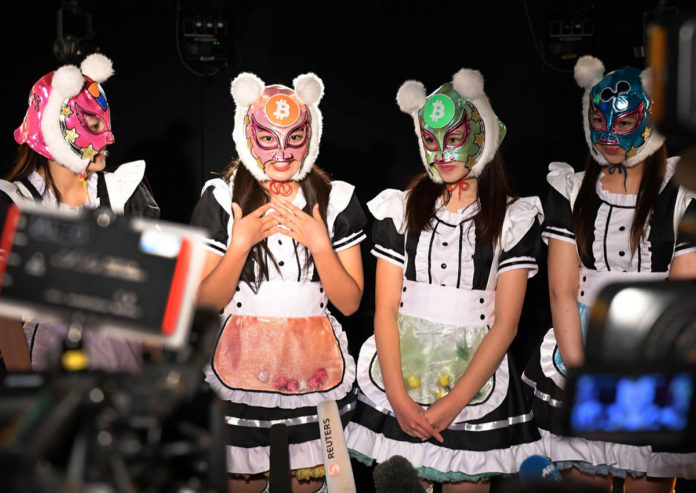
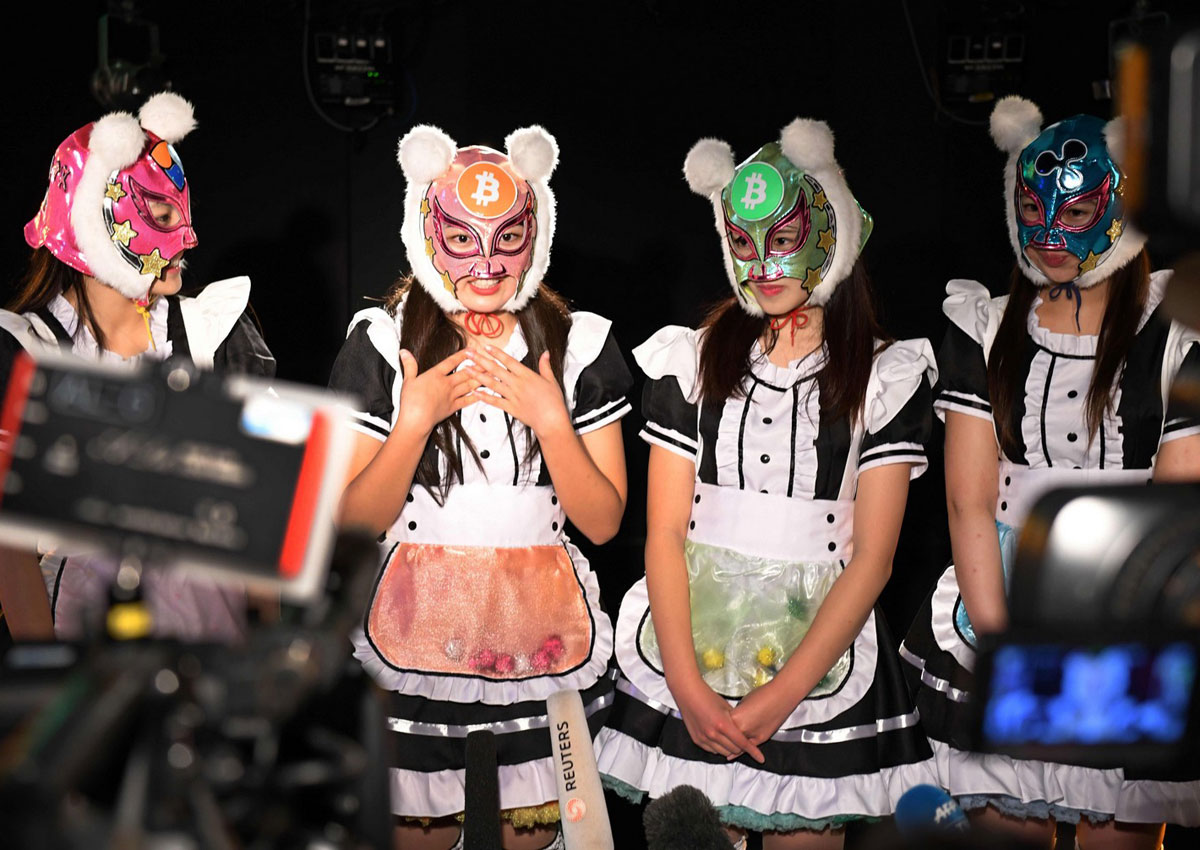
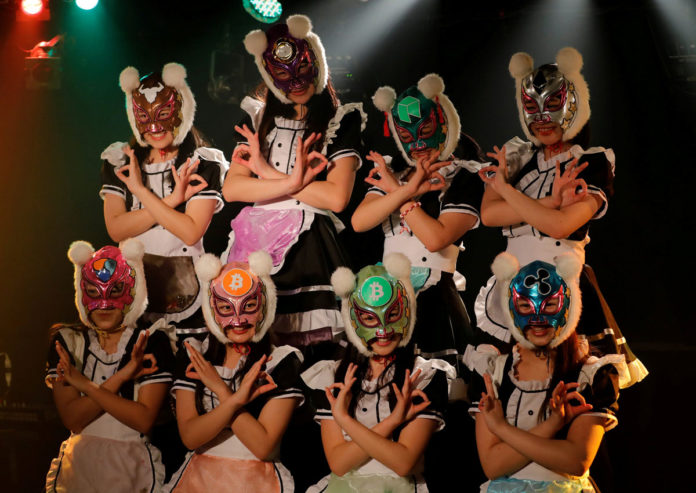
Japan’s latest “idol” band, the Virtual Currency Girls, took to the stage for their debut concert Friday to educate the public about cryptocurrencies – playing to frenzied fans waving their arms and chanting together.
“Our brains are fried as we are studying every day” about virtual currencies, said the group’s leader Rara Naruse, 18, as they began their live concert in Tokyo.
The band hopes to promote the idea “through entertainment” that virtual currencies are not just a tool for speculation but are a wonderful technology, she said.
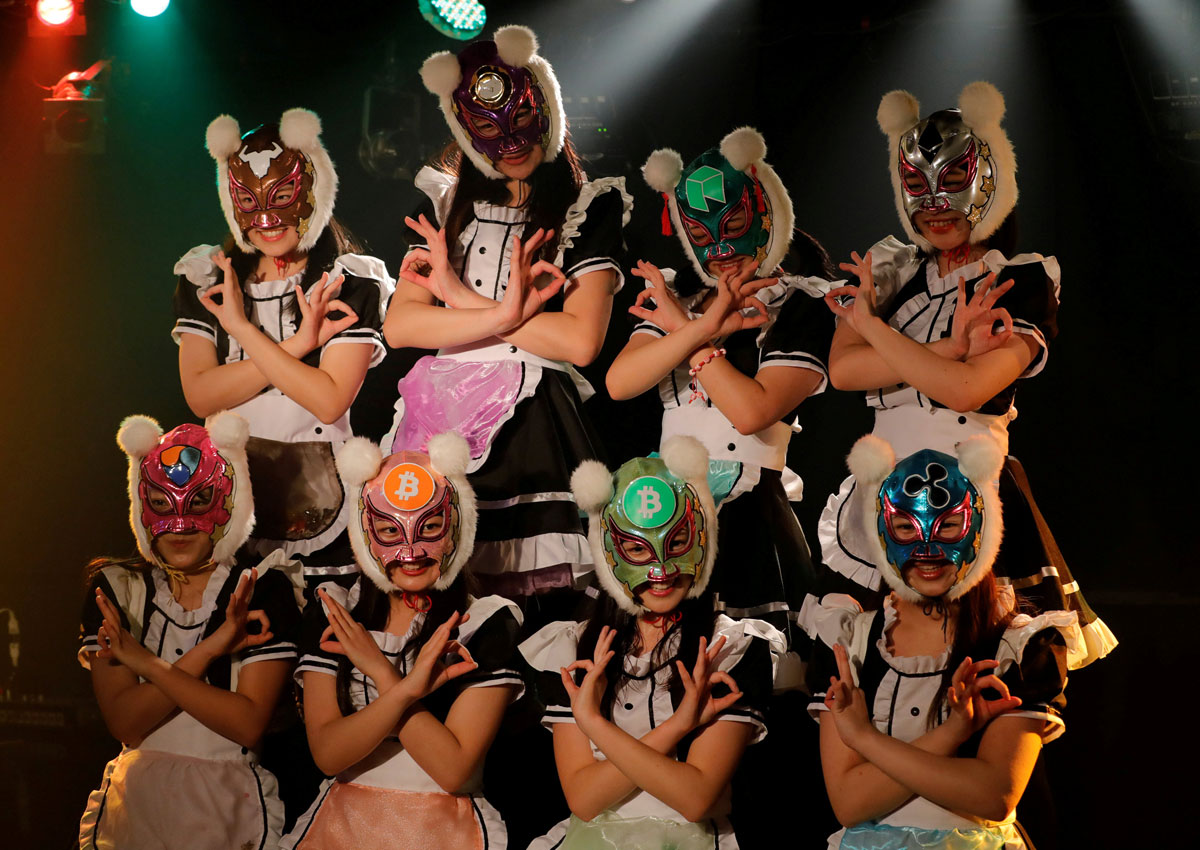
Each of the eight girls in the band, known in Japanese as “Kasotsuka Shojo”, plays a character representing a virtual currency such as bitcoin, ethereum or ripple.
Wearing character masks, frilly mini-skirts and “maid” aprons complete with knee-high socks, they performed in a small hall packed with dozens of hand-picked fans and media people.
Their tunes included their debut song, “The Moon and Virtual Currencies and Me”, which warns against fraudulent operators and urges people to make sure of their online security.
In keeping with the theme, fans were required to pay 0.001 bitcoin (around US$15) – to take a picture with one of his favourite performer. The price includes a hand-shake and some small-talk.
The girls are paid in bitcoin and payment for admission to future performances and merchandise will only be accepted in virtual currencies.
Their message appeared to be getting through.
One fan, 43-year-old Hiroshi Kasahara, who runs an ad agency, said: “I have been trading stocks and forex but not bitcoin or other virtual currencies as I was a bit scared of them.”
“But I feel like opening an account” if the group accepts payment only in virtual currencies, he told AFP.
Makoto Sato, 42, said the idol group had given him “a good introduction” to the world of cryptocurrencies.
“I may well give it a try as it can be a catalyst to make life more convenient and fun,” said the 42-year-old office worker.
At the end of the performance, fans cheered and clapped, with one screaming out: “Can’t stop loving you!”
The group is tapping into a rich seam in Japan, where bitcoin is recognised as legal tender.
Nearly one-third of global bitcoin transactions in December were denominated in yen, according to specialised website jpbitcoin.com.
The group’s launch comes on the heels of a recent market frenzy which boosted bitcoin up to nearly US$20,000 (S$26,430).
SINGAPORE: Patients who visit their general practitioners for treatment of chronic ailments can expect better care with the expansion of the Ministry of Health’s (MOH) Primary Care Network (PCN) scheme.
A total of 340 GP clinics are now part of the scheme, announced the ministry on Monday (Jan 15), with eight new networks joining the existing two.
The PCN scheme involves clinics organising themselves into networks that support holistic and team-based care. This means patients can visit these GP clinics for follow-up check-ups on their chronic conditions such as diabetes, and speak to nurses about how to care for their conditions.
These services, previously available only at polyclinics and hospitals, are important for good management of chronic conditions, said MOH.
Speaking at Mutual Healthcare Medical Clinic, Senior Minister of State for Health Dr Lam Pin Min said he was heartened by the number of GPs participating.
“GPs in PCNs are able to share and optimise resources, and they can also share best practices among themselves to better manage care of chronic diseases,” Dr Lam said.
“If we can reach 25 per cent of GP clinics, that would be a very good result. But the more the merrier, and we strongly encourage more GPs to participate in the PCN,” he added.
MOH piloted the PCN scheme in 2012 and announced last March that it will scale up the scheme. GPs participating in the scheme will get funding and administrative support from the ministry to implement team-based care, to better track the care outcomes and monitor patients more closely.
Nurse counsellor Serene Ang explains a patient’s condition to Dr Lam Pin Min. (Photo: Gwyneth Teo)
Doctors said being part of a network of clinics allows them scale to implement better practices that they may not have been able to do so otherwise.
“One of the very important things that PCN has introduced is to get every GP clinic to set up a chronic disease register,” said Dr Chong Chin Kwang of Frontier PCN.
“This compiles the list of patients under the chronic disease management of the GP clinic. There can then be systematic tracking of these patients’ important care components. In the past, the typical GP clinic would not have set up such a chronic disease register.”
Frontier PCN was one of the two previously existing networks, starting as a ground-up initiative in 2013. It now consists of 39 clinics in its network.
Dr Wong Tien Hua, a GP at Mutual Healthcare Medical Clinic, noted the usefulness of having allied health practitioners do in-house consultations.
“It frees up the doctor’s time to look after the patient, to look specifically at their medical issues; whereas some of these lifestyle issues like weight loss, diet, and smoking cessation, we can refer to the nurse counsellor to spend more time with them.”
Patients also appreciate that these check-ups are now closer to home.
Mr Chong Chan Chai, 46, an IT manager who is diabetic, visits his family clinic located less than 200m away from his home for his check-ups.
“It’s easy access and convenient. At a hospital, you make an appointment, you still have a long wait. Here, you can make an appointment for next week, it’s very fast,” he said.
The primary care networks are part of the MOH’s strategy to decentralise care beyond the hospitals and into communities, so that patients can receive effective care closer to home.
MOH noted that with an ageing population, the prevalence of chronic diseases and complex care needs with rise.
The ministry added that a budget of S$45 million per year has been committed to support the PCN scheme over the next five years.
Participating GPs will be able to tap in funding and support from MOH and the Agency for Integrated Care to support their team-based care for patients.


