Cranberries singer Dolores O’Riordan, who died suddenly in London Monday at the age of 46, was about to record a version of her hit “Zombie” with the hard rock band Bad Wolves, the group said on Tuesday.
“We are shocked and saddened at the news of Dolores’s passing, mere hours before she was to record vocals on our upcoming version of Zombie,” the band said in a message on Facebook.
The band’s singer Tommy Vext said: “We always felt the rawness and honesty she projected on stage and in her recordings was something to which all bands should aspire to, regardless of genre.
“When we heard she liked our version and wanted to sing on it, it was the greatest compliment a new band, or any band for that matter, could have received,” he said.
Music producer Dan Waite, a friend of O’Riordan’s, said she had left him a voice message shortly before her death “stating how much she loved the Bad Wolves’ version of Zombie; she was looking forward to seeing me in the studio and recording vocals.
“She sounded full of life, was joking and excited to see me and my wife this week. The news of her passing is devastating,” he said.
Police said they were called to a hotel in Park Lane in the centre of the British capital at 0905 GMT on Monday where a 46-year-old woman was found dead at the scene.
A police spokeswoman on Tuesday said the death was “not being treated as suspicious”.
PETALING JAYA – The days of spending hours in a crawl along the Johor-Singapore Causeway and long queues at Customs and Immigration counters to get into Singapore are numbered.
A new 4.2km Johor Baru-Singapore Rapid Transit System Link (RTS Link) will see easy movement of people from one city to another.
The link will have co-located Customs, Immigration and Quarantine (CIQ) and provide seamless connectivity between Bukit Chagar station in Johor Baru and the Woodlands North station Singapore.
Malaysia and Singapore yesterday signed the Johor Baru-Singapore Rapid Transit System agreement, the second cross-border rail agreement between the two countries in two years.
on Facebook
FB Live: PM Lee held a joint press conference with Malaysian PM Najib Razak at the Istana today. Mr Najib was in Singapore for the annual Singapore-Malaysia Leaders’ Retreat. 🇸🇬🇲🇾
Posted by Lee Hsien Loong on Monday, 15 January 2018
The signing of the agreement was witnessed by Prime Minister Datuk Seri Najib Tun Razak and Singapore’s Lee Hsien Loong after the eighth leaders’ retreat here.
Malaysia was represented by Minister in the Prime Minister’s Department Datuk Seri Rahman Dahlan and Singapore by its Coordinating Minister for Infrastructure and Minister of Transport Khaw Boon Wan.
“We have looked at how Customs and Immigration clearing is done for rail services between Britain and France,” Land Public Transport Commission’s chief executive officer Mohd Azharuddin Mat Shah said during a briefing on the proposed project.
He said the RTS Link was necessary to ease congestion along the present 1.056m causeway.
“The causeway is heavily congested with the number of vehicles rising.
“The matter is compounded as KTMB rail service can only ferry about 320 passengers an hour or 6,000 passengers a day to Singapore,” he said.
The RTS Link will be able to transport some 10,000 passengers an hour or 72,000 passengers a day in four coaches travelling at 70kph.
Lee said the link, when completed in 2024, will benefit thousands of daily commuters and reduce Causeway congestion.
Najib took note that congestion at the Causeway peaked especially during festivities and school holidays.
The RTS Link stations will also be well integrated with the local public transport networks in each country.
Mohd Azharuddin noted that the RTS Link would run above ground while in Johor and on a 25m-high bridge track across the straits before travelling underground to Woodlands North in Singapore.
“Commuters will spend about 30 minutes to travel and clear customs and immigration,” he said.
“This will save a lot of time compared to currently spending one or two hours stuck along the Causeway and Immigration,” he added.
Based on a study done by SPAD in 2016, an average of 4,000 buses, 52,000 cars and 72,000 motorcycles spend at least an hour to get across the causeway.
He said the KTMB rail service will be discontinued six months after the RTS Link becomes operational in Dec 2024.
LOS ANGELES – Kim Kardashian and her rapper husband Kanye West announced their third child on Tuesday (Jan 16), a girl born to a surrogate.
“Kanye and I are happy to announce the arrival of our healthy, beautiful baby girl,” Kardashian said in a message on her app.
The couple thanked the unidentified surrogate “who made our dreams come true with the greatest gift one could give.”
They said the baby was born on Monday but they did not announce a name.
Kardashian, 37, and West are already parents to North, four, and Saint, two.
The Keeping Up With The Kadashians reality and social media star has said she decided to use a surrogate after doctors warned of serious health risks if she became pregnant again.
Kardashian has given detailed accounts on her blog about the difficulties she experienced during her two pregnancies.
Two of Kardashian’s sisters are also expecting babies.
Khloe Kardashian, 33, announced in December that she is six months pregnant with her basketball player boyfriend Tristan Thomas’ child, while their half-sister Kylie Jenner, 20, is reported to be expecting her first child soon.
The arrival of Kardashian and West’s third child swiftly became on of the top five trending topics on Twitter.
SINGAPORE: Want to find out the story behind Singapore’s mosaic playgrounds or discover what Orchard Road was way before it became a shopping belt?
The National Heritage Board (NHB) has unveiled its line-up of events for 2018, and it includes a new exhibit on the history of local playgrounds and an Orchard Heritage Trail.
The former, titled The More We Get Together: Singapore’s Playgrounds 1930-2030, will be presented by the National Museum of Singapore in April.
Done in collaboration with the Housing and Development Board, it will feature archives and visuals to trace the development of Singapore’s playgrounds from its earliest known records through to the iconic dragon playground haunts of the 1970s to reimagined future versions.
“Much like museums, playgrounds are important civic spaces where lifelong memories are made,” said museum director Angelita Teo.
“Through this exhibition, we have collaborated with many partners to explore how playgrounds such as the iconic dragon playground in Toa Payoh have shaped Singapore’s collective memory, and how they continue to connect us all.”
Watermelon playground at Tampines Central Park in 1993. (Photo: Ministry of Information and the Arts Collection, National Archives of Singapore)
Meanwhile, the NHB will launch its 18th heritage trail in July, which will touch on the history surrounding Orchard Road and its environs from the 1920s up to the present.
The trail will stretch from the YMCA International House – which is incidentally 1 Orchard Road – to the Botanic Gardens.
Despite being known more for its shopping from the 1970s onwards, Orchard Road is rich in heritage, said Norsaleen Salleh, NHB deputy director for education and community outreach.
“It used to be full of hills and valleys, and was quite fertile,” she said, adding that it would eventually become known for its gambier and fruit plantations.
These, in turn, would encourage its growth as a residential area where different communities would converge – including the Peranakans of Emerald Hill, the diplomatic missions that built their embassies such as Thailand and Indonesia, and dhobis (or washermen) from whom Dhoby Ghaut would later be named.
Shoppers at Orchard Road. (Photo: Aqil Haziq Mahmud)
One of the main heritage-related highlights of the year would be the unveiling of Our SG Heritage Plan, Singapore’s first national masterplan for the heritage and museum sector.
Details will be announced during the Committee of Supply Debate in March, before its official launch during the annual Singapore Heritage Festival the following month.
Other events to catch over the course of the year are: The Asian Civilisations Museum’s exhibit on Cambodia’s ancient city of Angkor in April; the Indian Heritage Centre’s show on the Chetti Melaka in October; and a dog-themed Chinese New Year show at the Singapore Philatelic Museum next month.
Kampong Glam. (Photo: Calvin Oh)
There will also be two photography-related exhibitions: One on the popular Siamese fighting fish at the Sun Yat Sen Nanyang Memorial Hall in June, and another on the Polaroid at the National Museum in November.
Finally, the Malay Heritage Centre (MHC) will be taking a closer look at the history of Kampong Glam as it has never been seen before – as a hub for Haj pilgrims.
The exhibit Pilgrims’ Stories From The Malay World To Makkah, which will be up in October, will look at the area’s history as a place where pilgrims from as far Java and Sumatra would congregate before sailing to Mecca, a practice that continued to as recent as the 1970s, said Jamal Mohamad, MHC’s programmes manager.
The exhibit will also coincide with its annual festival, which will focus on the Haj and also the different “cultural expressions” and “rituals of worship” from the Malay Archipelago.
SINGAPORE: The bilateral agreement signed between Singapore and Malaysia to build a cross-border MRT line by 2024 will be a “game changer” going into elections that must be held by August, said Malaysia’s Minister in the Prime Minister’s Department Abdul Rahman Dahlan.
In an interview with Channel NewsAsia on Tuesday (Jan 16), the Malaysian minister overseeing the Johor Baru-Singapore Rapid Transit System Link (RTS Link) agreement said that the project will matter to thousands of Malaysians who cross the Causeway every day.
“The PM is working hard to ensure they don’t have to face the four-hour jam on the Causeway and I think they’ll appreciate this,” he said.
“I think business people and people who have some employment on both sides (will care) and also (there’s) the feel-good feeling.
“This announcement done by the PM is going to be a game changer for the election, for at least the people of Johor.”
Malaysian Minister in the Prime Minister’s Department Abdul Rahman Dahlan speaking to Channel NewsAsia after the signing of the bilateral agreement on the JB-Singapore Rapid Transit System Link.
Mr Rahman Dahlan said the agreement was made possible due to Mr Najib’s leadership, a departure from the approach previously taken by Malaysia’s longest serving Prime Minister, Mahathir Mohamad, who is now leading the opposition.
“We all know that under PM Najib we’ve moved so much faster and forward in terms of exploring possibilities with the government of Singapore,” the minister told Channel NewsAsia.
“Under the previous administration especially Tun Mahathir, we could not move an inch. Even though Singapore is the closest neighbour and most integrated economically, Tun Mahathir took the position of being non-cooperative and that is a shame … it’s regrettable because there’s so much to gain just by being friends with neighbours.”
DESIGN OF CONNECTING BRIDGE
The road to the signing of the bilateral agreement was, however, not without some bumps, with the Johor Sultan expressing concerns last year over the design of a connecting bridge.
Mr Rahman Dahlan had sought an audience with Sultan Ibrahim Sultan Iskandar after to seek his feedback, now incorporated into the finalised 25m-high bridge that will cross the Strait of Johor in a straight line.
“We have agreed to the proposal from the Sultan of Johor and the design has come out very well with a total length of 4km,” Transport Minister Liow Tiong Lai told Channel NewsAsia.
“We’ll (still) be able to complete the project by the year 2024 so I think it’s a good proposal and we think this will actually help further connect the two countries.”
The earlier plan was for a rail track that will curve over water as well as an elevated bridge as high as 30m above water in the middle section. But Malaysian media reported that the Sultan had criticised the curved design, saying it would disrupt the city skyline along the Johor Straits.
Malaysia and Singapore also had to carry out negotiations on which country would have a controlling stake of their joint venture operating company, with Singapore wanting a 50-50 split but Malaysia believing there should be a dominant party to make decision-making easier.
“We impressed upon the Singaporeans that it’s quite difficult to move forward as a company especially when we have to make some major decisions if the equity is 50-50. So we proposed 52-48 on the basis that we have sacrificed the KTM train service (for this project) – we have to dismantle and stop the service of KTM – and also for the purpose of moving forward in terms of making business decisions,” said Mr Rahman Dahlan.
“And I thank the negotiators from Singapore, they’ve agreed that Malaysia should hold 52 per cent and Singapore holds 48 per cent in terms of equity,” he added.
“But also I have assured that we will in no way trample upon the minority interest. Whatever issues that we have we will have to sort it out on the basis of friendship and for the nation.”
When completed by 2024, the RTS Link will be able to carry up to 10,000 passengers in each direction every hour. This translates to an additional capacity of 60,000 users crossing the Causeway during peak hours.
SINGAPORE: One person was injured after an accident involving two cars at Sixth Avenue on Tuesday afternoon (Jan 16).
This happened near the junction of Holland Road and Sixth Avenue. The Singapore Civil Defence Force (SCDF) said it was alerted to the accident at 2.20pm.
According to the police, a68-year-old woman was taken conscious to National University Hospital. Channel NewsAsia understands that she was a passenger in one of the cars, a dark blue BMW.
Photos circulating on Telegram show a white Audi and a BMW both badly damaged in the front.
A photo circulating on social media shows the blue BMW’s damaged front. (Photo: SG No. 1 All in 1 Sharing, Updates/Telegram)
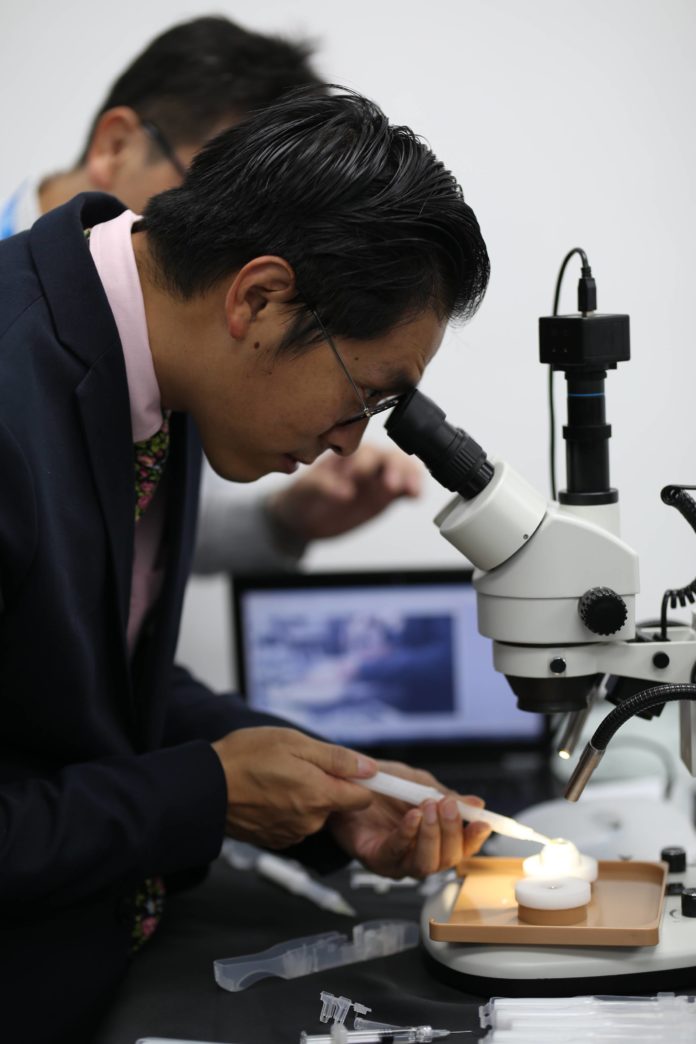
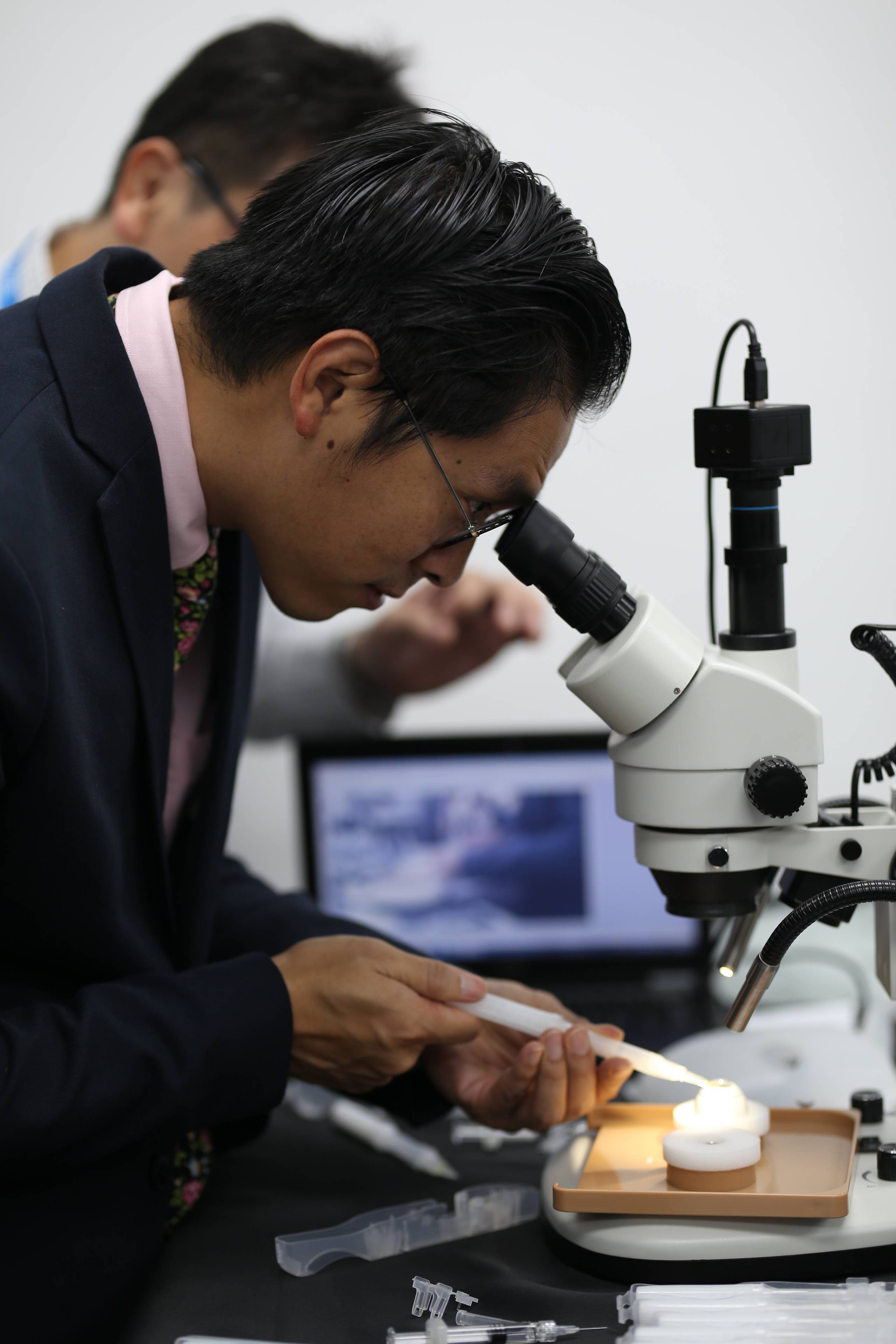
SINGAPORE: Optics technology firm Hoya Corporation’s intraocular lenses manufacturing division Hoya Surgical Optics (HSO) opened its global research and development (R&D) facility in Singapore on Tuesday (16 Jan).
Intraocular lenses are artificial lenses used to treat cataracts by replacing the eye’s natural lenses during surgery.
The new centre is the division’s second R&D facility, with the first being in Japan.
Mr John Goltermann Lassen, the chief executive of HSO, declined to disclose the cost of the research facility, or the number of jobs it will create, but said that the company will be looking for “people that are researchers (who) would be able to contribute biomedical (and) process technology research”.
“We are looking at technologies that would come to market three, four, five years from today,” Mr Lassen said.
The move to Singapore was “natural”, Mr Lassen added, as HSO’s global headquarters and manufacturing plant are already located in Singapore.
Singapore also has a strong ophthalmology and biomedical presence in the world, he said, and the move will “give us close proximity to our people and allows us to formalise collaborations with Singapore’s eye community.”
He said that the research centre will look at developing higher-quality lenses that can avoid some of the side effects of cataract surgery.
Managing director of the Singapore Economic Development Board Chng Kai Fong during a hands-on demonstration. (Photo: Hoya)
According to National University Hospital’s Dr Clement Tan, who is the head and senior consultant at the Department of Ophthalmology, even after a successful operation, lens cells can grow back in as fast as one to two years, causing vision to cloud again.
“It will be lovely to have lenses that consistently prevent the regrowth of these cells (so that) patients would not need to undergo a second procedure,’’ Dr Tan said.
CATARACTS A GROWING CONCERN
The new facility comes at a time when the prevalence of cataracts in Asia is likely to increase due to the region’s ageing population, HSO said in a press release.
According to the World Health Organization, cataracts is the leading cause of blindness worldwide, and the second-most common cause of moderate to severe vision impairment.
The number of people with vision impairment could increase exponentially due to population growth and ageing, the WHO wrote. It is estimated that by 2020, 38.5 million people will be blind. That figure could triple to 115 million by 2050.
Accoding to data from Singapore Health Services, more than 80 per cent of people above 60 years old in Singapore have some form of cataracts, and more than 30,000 procedures are carried out every year.
While Singapore is “well-served where cataracts are concerned”, Dr Tan said, the access to cataracts treatment is still a challenge in other countries.
“(There are) lots of people with cataracts, (but) not enough people with doctors, not enough access to surgery. So the big challenge is getting the patients surgery and … bringing down the cost of cataract surgery and the implant so that it becomes affordable,” he said.
(From left) Hoya CEO Hiroshi Suzuki, managing director of the Singapore Economic Development Board Chng Kai Fong, and Hoya Surgical Optics chief executive John Goltermann Lassen. (Photo: Hoya)
HSO’s new facility comes in line with Singapore’s five-year R&D funding plan called the Research, Innovation and Enterprise 2020, or RIE 2020. It has allocated S$4 billion to biomedical research, of which ophthalmology is a focus area, said the Economic Development Board (EDB).
Ms Ho Weng Si, EDB’s director of biomedical sciences, said that it has been working with companies such as Hoya and Essilor to establish Singapore as a centre for ophthalmology research.
SINGAPORE: Some might remember that during the golden age of Malay cinema in the 1950s and 1960s, classic films like the popular P Ramlee movies were made in Singapore by the now defunct Cathay-Keris and Shaw Brothers’ Malay Film Productions.
A more obscure fact is that many of these movies were also filmed on location here, outside studios and sound stages.
State of Motion – the Asian Film Archive’s (AFA) annual flagship film and visual arts series of programmes – is back for the third time to offer glimpses and insights into Singapore’s past.
Held from now to Feb 11, State of Motion 2018: Sejarah-ku (“My History” in Malay) will be not only be showcasing free screenings of 10 Malay movies that reflect the looming cultural and ideological changes of pre-independent Singapore, but also conducting guided tours to film locations used in the old films.
These ticketed tours provide a rare chance for participants to step back into Singapore’s history to experience for themselves how offshore islands like Pulau Sekudu were used as on-site filming locations for movies like Hang Tuah (1956) from Shaw Malay film productions and Hang Jebat (1961) from Cathay-Keris studios.
This is the first time State Of Motion is conducting an offshore tour via boat which will culminate in an immersive dance performance – Cinta Tuah Jebat (The Love of Tuah and Jebat). Conceived by akulah BIMBO SAKTI, it examines the final fight between the protagonists from both the above-mentioned films through recorded audio playback and live performance.
There are also tours around different parts of Singapore where participants will get a fresh look at old locations.
For instance, Tanah Merah Besar, where the main road now ends at a fence at the perimeter of Changi Airport, was a beachside recreational park for swimming and picnicking. This made it a popular film location. In 1963’s Darah Muda, the park is the meeting place for a mother and her forcibly-separated daughter.
A film still from 1963’s Darah Muda (Photo: Shaw Bros.’ Malay Films Productions)
Other film locations include Shaw’s Villa at Upper East Coast Road, Punggol Point and Sungei Serangoon, where site-specific artwork relevant to individual films will be on display.
All the artworks produced for this edition are curated by Kamiliah Bahdar, and include a sculptural work by Khairulddin Wahab that will accompany the exhibition at the National Library Plaza which showcases the history of the films and the themes of the era.
An independent visual arts curator, Bahdar told Channel NewsAsia that the objective and purpose of this project is encapsulated in this year’s title: Sejarah-ku.
“We are looking at all these films as a repository and a document of social history,” she said. “And because these films are audio and visual, we feel they are really a way for people to connect with a past society. And with the ideas circulating back then, people can also connect to that past history.”
Mogok (1957), Sri Menanti (1958), Isi Neraka (1960), Seniman Bujang Lapok (1961), Ibu Mertua Ku (1962) from Shaw Malay film productions, and Selamat Tinggal Kekasehku (1955), Noor Islam (1960) from Cathay-Keris studios round up the full list of films, which will all be screened at the Malay Heritage Centre. Admission is free with registration at stateofmotion.sg.
With more than 150 films that were made by Malay Film Productions, Bahdar admitted it was difficult to choose the final 10 to be screened.
“In the end, we picked films that we felt we could use to highlight issues that were pertinent to the Malay community back then,” she said, adding that it was a good mix of both iconic films and lesser-known ones.
State of Motion is part of AFA’s efforts to preserve the rich film heritage of Singapore and Asia, and to cultivate an appreciation of history, film and the arts among a wider audience.