Heather Locklear was arrested on Sunday night (Feb 25) in Thousand Oaks, California, on suspicion of domestic violence and battery on a police officer, Captain Dean Cook of the Thousand Oaks Police Department told Variety.
Locklear, 56, was charged with one count of domestic violence – a felony – and three counts of battery on emergency personnel, which are misdemeanors. Police responded to the scene around 9.40 pm. According to the Los Angeles Times, Locklear claimed an injury prior to cops’ arrival and was taken to a hospital before she was booked at Ventura County Jail. She has since posted US$20,000 in bail.
According to audio of the 911 call obtained by TMZ, Locklear’s brother called the police after coming to her home, and finding Locklear and her boyfriend arguing. TMZ also reports that the actress kicked three deputies who tried putting her in custody.
“She was extremely hostile and uncooperative and at one point became combative with the deputies,” Sgt. Eric Buschow of the Ventura County Sheriff’s Office told the Times.
The former Melrose Place star has been in trouble with the law before. She was arrested in 2008 on suspicion of driving under the influence. Additionally, Locklear and ex-fiance Jack Wagner were ordered to appear in court in 2012 after an alleged violent fight. Locklear’s rep did not respond to a request for comment.
SINGAPORE: A child was taken to hospital after an accident on Wednesday (Feb 28), involving a car and a taxi along Compassvale Drive.
The Singapore Civil Defence Force (SCDF) said it received a call at 7.17am about the incident. The child had minor injuries and was taken to KK Women’s and Children’s Hospital, SCDF added.
A taxi and a car were involved in the accident on Wednesday (Feb 28) at a junction along Compassvale. (Photo: Johnson)
Photos showed the blue ComfortDelgro taxi near a curb in the middle of a junction and the car on its right side with its front smashed.
SINGAPORE: The Government’s observation in Budget 2018 of a “shift in global economic weight towards Asia” is timely. Singaporean companies have been shown to be able to perform well overseas.
In 2016, a survey conducted by IE Singapore found that for small- and medium-sized enterprises that had ventured abroad, overseas revenue growth was significantly stronger than total revenue growth, with overseas revenue forming approximately 53 per cent of their total revenue.
The 2017 Annual Business Survey from the Singapore Chinese Chamber of Commerce and Industry (SCCCI) showed 61 per cent of respondents intend to venture overseas over the next three years.
It is also interesting to note that 75 per cent of respondents from the Association of Small and Medium Enterprises (ASME)’s Business Sentiment Survey 2018 indicated that ASEAN is their preferred region to venture into.
However, significant challenges remain that prevent these SMEs from venturing overseas. For example, 68 per cent of respondents in the SCCCI survey stated unfamiliarity with rules and regulations in overseas markets as their top challenge while venturing overseas.
THREE CENTRAL OBSTACLES TO SMES EXPANDING OVERSEAS
Our research on SMEs and Trade Associations and Chambers (TACs) suggests there are three main issues stopping many businesses from making the leap – a lack of capital, a lack of talented staff to anchor the business, and a lack of market information.
The Government is well aware of these factors, and has in fact long extended assistance in exactly these three areas.
For instance, IE Singapore has been fielding two main grants, the Market Readiness Assistance (MRA) grant and the Global Company Partnership (GCP) grant, which provide funds and assistance in sourcing talent for businesses.
IE also fields offices in over 35 locations around the world as well as a grant for attending tradeshows and trade missions, providing market knowledge and networking opportunities.
Surveys conducted by TACs, however, continue to observe that these grants and schemes tend to suffer from a relatively low take-up rate.
Communications and Information Minister Dr Yaacob Ibrahim speaking at the SCCCI SME and Infocomm Conference on Wednesday (Aug 16, 2017). (Photo: Calvin Hui)
DOES BUDGET 2018 ADDRESS THESE PROBLEMS?
Based on feedback from SMEs on their lack of capital to internationalise, the enhanced Double Tax Deduction for Internationalisation (DTDi) would be welcome savings for those choosing to internationalise.
Further efforts include the tweaking of many grants seemingly to spur take-up rates. For instance, the new Enterprise Development Grant (EDG), will integrate the relatively well-received Capability Development Grant (CDG) with the GCP grant, directly addressing feedback that government schemes were too varied and numerous.
In our research, however, many SMEs stated that the practice of reimbursement rather than providing cash upfront tended to deter them from applying for government grants. Thus, it remains to be seen if the streamlining measures in this Budget will yield any appreciable difference in grant take-up rates.
To address the lack of suitable manpower with regional experience, Budget 2018 introduced the ASEAN Leadership Programme to complement the Professional Conversion Programme (PCP) – Southeast Asia Ready Talent that was introduced last year.
In addition, the new EDG may prove to have an unmentioned synergy with other grants such as the new Productivity Solutions Grant (PSG).
Where the SMEs we had spoken to often cite a lack of trustworthy staff to anchor overseas operations, manpower saved from PSG solutions may free up staff in small companies, therefore allowing them to explore the option of venturing overseas under the EDG.
Finally, there were several promising initiatives announced to help businesses overcome a lack of market information, primarily through encouraging companies to work together with foreign and local companies to go abroad, such as the following;
The enhanced Partnerships for Capability Transformation (PACT) initiative will provide funding for collaboration among local and overseas enterprises of all sizes.
The Open Innovation Platform will be a digital platform matching companies with problems that can be solved digitally, with companies that specialise in solving them. This may be an especially useful tool for SMEs hoping to adopt digital solutions with limited resources
The newly announced Infrastructure Office will aim to bring together local and international firms across many industries to enhance connectivity in the region, providing smaller firms with a golden opportunity to network and gain a foothold overseas.
These initiatives could serve as short-term sweeteners for companies who have made the strategic business decision to expand overseas. Their effect would take time to manifest and would be hard to measure.
To overcome the lack of a talented workforce suitable for manning an overseas expansion, Singapore can do more to prepare our workforce for the broader ASEAN market, for instance, in the area of regional language proficiency.
ASME’s 2017 Business Sentiment Survey found that 29 per cent of respondents stated unfamiliarity with language and cultural practices as a concern for expanding abroad.
The 2015 General Household Survey has shown that Singaporeans are overwhelmingly proficient in only English and their mother tongue.
ASEAN, on the other hand, is home to some of the largest language groups in the world, with over 200 million Bahasa Indonesia and Bahasa Malaysia speakers, and 75 million Vietnamese speakers.
Further, only one out of the top ten destination countries for our students is in ASEAN, Malaysia, with the majority being in Europe and North America. This represents lost opportunities for Singapore to integrate itself with regional economies in the future.
A workforce fluent in ASEAN languages and culture will invariably improve business relations and making it easier for our companies to expand overseas.
It would be good if our schools and companies could provide and encourage the learning of various ASEAN languages such as Bahasa Indonesia and Vietnamese among Singaporeans.
A worker attaches materials at a construction site in Jakarta. (Photo: AFP/Romeo Gacad)
YOU CAN LEAD A HORSE TO WATER BUT YOU CAN’T MAKE IT DRINK
The Government has listened to private sector feedback in this Budget, with obvious efforts to streamline and tweak existing schemes. Yet, the Government’s efforts are ultimately not new, and can only aid efforts to expand overseas to a limited degree.
We are situated in one of the fastest growing economic regions, but more Singaporean businesses must themselves recognise the benefits of internationalisation, develop an effective overseas business strategy and in so doing, tap on available government schemes and resources.
As mentioned earlier, government schemes could continue to come up against a wall of inertia among our businesses towards internationalising because of prevailing challenges.
Ultimately, it is far from a government’s sole responsibility to finance a business’s overseas expansion, and the grants are intended as incentives for a business to expand overseas, not as a substitute or a supplement to their business expenditure.
The writers are from the Institute of Policy Studies. Faizal bin Yahya is a senior research fellow and Mooris Tjioe is a research assistant
NTUC deputy secretary-general Heng Chee How questions need for age requirement amidst growing performance-based employment practices.
Office workers at Raffles Place. (Photo: TODAY)
(Updated: )
Bookmark
SINGAPORE: NTUC deputy secretary-general Heng Chee How on Tuesday (Feb 27) called for the formation of a committee to look into the need for a statutory retirement age, which is currently 62. The retirement age has been raised only once, from 60 to 62, in 1999.
Speaking during the Budget debate in Parliament, he said that the Tripartite Committee could also review the need for a ceiling to the re-employment age band. Employers must offer re-employment to eligible employees who turn 62, up to the age of 67, to continue their employment in the organisation.
He asked if these age-based criteria were necessary “in the light of the pervasive adoption of the performance-based employment model over the years”. If deemed necessary, he said the committee could clarify the conditions under which the re-employment ceiling of 67 could be raised further, and to what age.
The re-employment age limit was raised from 65 to 67 last year to help older workers who wish to continue working as long as they are willing and able.
Mr Heng, who is Senior Minister of State in the Prime Minister’s Office, said that the recommendation to raise the retirement or re-employment age to 67 was among those made by the Tripartite Committee on the Extension of the Retirement Age in July 1997, and was achieved after 20 years.
Mr Heng also suggested an assessment of the Effective Retirement Age, which is the average age at which workers declare retirement, introduced in 1993. The assessment can be taken into consideration when recommending measures to further raise the Employment Rate of older workers.
These measures cover how the upgrading of older workers and age-universal practices can be included in the implementation of Industry Transformation Maps.
Pointing to estimates that say that up to 25 per cent of jobs in the current economy may be altered or displaced by technology within the coming 20 years, Mr Heng said that the average older working person may face higher hurdles in the adaptation and switching process.
This is on top of ageist attitudes among some employers, and such workers may be displaced out of the workforce long before reaching the re-employment age, he said.
“With such pervasive technology, rapid digitalisation and changing business models, how can companies stay competitive while tapping on mature workers who bring value, insights and experience to the table?” he asked.
He also asked if there could be more efforts in trying harder to make the workplace more conducive for them to make a contribution in, and training them to be more digitally aware and technologically competent.
“In this rapidly changing world of work, skills requirements change quickly with the flux of competitive business models, technology and innovation. Old areas of the economy fade away even as new opportunities emerge,” he added.
NETS’ hour-long service downtime was not in breach of regulatory requirements to be back online within four hours of a disruption, Mr Tharman Shanmugaratnam says.
A NETS FlashPay terminal and a receipt obtained by Channel NewsAsia showing a declined transaction during a service disruption on Feb 2, 2018.
(Updated: )
Bookmark
SINGAPORE: Payments service provider NETS has been instructed to appoint an independent consultant to determine how controls can be enhanced so service disruptions due to human errors like the one on Feb 2 can be minimised, said Deputy Prime Minister Tharman Shanmugaratnam on Tuesday (Feb 27).
In a written reply to a parliamentary question by MP Tan Wu Meng, Mr Tharman said the consultant will also advise on how NETS can mitigate the consequences if an error does occur. In the meantime, the service provider has scheduled all system administrator access to off-peak hours and tightened access controls, he added.
On the Feb 2 incident, the Coordinating Minister for Economic and Social Policies shed more light on how it occurred, saying NETS’ investigation showed the outage happened because a system administrator “inadvertently executed a command that abruptly terminated a communications module, which is required for connectivity to the banks”. This was done while preparing for a planned system change activity, he added.
The Monetary Authority of Singapore’s (MAS) regulations state that designated payment systems (DPS) like NETS’ Electronic Funds Transfer at Point of Sale (EFTPOS) are to resume operations within four hours following any disruption, and in this case, it did, Mr Tharman pointed out.
“NETS was prompt in notifying the public about the outage, providing updates, and most EFTPOS’ services were recovered in about one-and-a-half hours,” he said. “NETS’ EFTPOS has not experienced a similar outage since being designated as a DPS in 2010.”
DPS operators are restricted to a maximum downtime of no more than four hours across a period of 12 months, the minister highlighted.
He added that MAS will closely monitor NETS’ remediation of the identified gaps and issue supervisory directives to the service provider as needed.
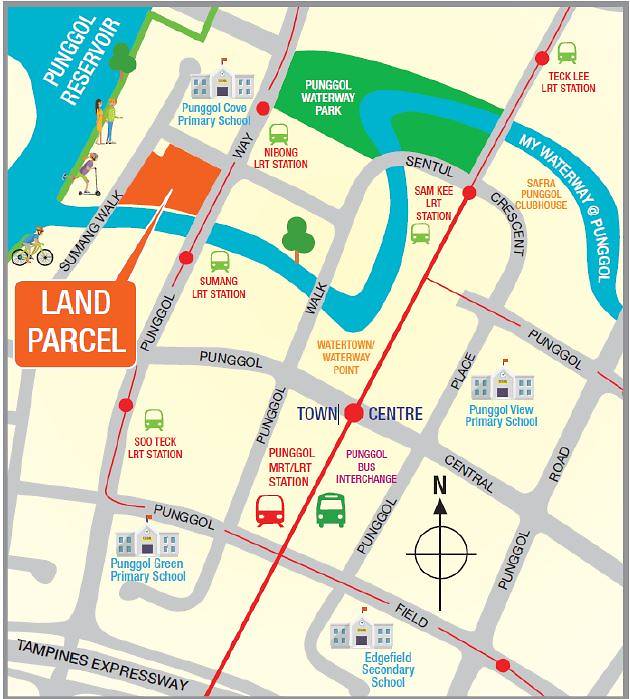
SINGAPORE: A land parcel at Sumang Walk attracted 17 bids at the close of its tender on Tuesday (Feb 27).
The Housing and Development Board (HDB) said the sale site, earmarked for executive condominium (EC) housing, received a joint top bid of S$509.37 million from CDL Constellation and TID Residential. This works out to about S$6,275 per square metre of the gross floor area (GFA).
Mr Ong Teck Hui, National Director for Research at JLL, said: “At $583 psf/pr, it is a stunning top bid for the subject parcel which is way above market expectations and also a record EC unit land price.
“This is also 64 per cent higher than the top bid of S$355 psf/pr for the Anchorvale Lane site in August 2016, which was the last EC tender.”
Mr Ong said the absence of an EC land tender for one and a half years, an “undersupplied market” with less than 1,000 EC units unsold and a rising private residential market may have contributed to the “bullish outlook” among bidders.
“There seems to be an assumption that EC prices will rise by more than 20 per cent by the time the project on the subject site is launched,” he added.
Land Parcel at Sumang Walk (Image: HDB)
The tender for the 27,056.4 sq m site was launched on Dec 12, 2017. In a press release, HDB said the 99-year leasehold site can potentially yield a maximum of 820 dwelling units.
The HDB added that a decision on the award of the tender will be made after all bids have been evaluated.
In the event that CDL and TID are awarded the site, they will explore an EC project comprising 13 blocks of 10 to 17 storeys with about 820 units and a basement carpark, CDL said in a statement on Tuesday.
Mr Sherman Kwek, group CEO of CDL, said: “We are very pleased to win this keenly contested Sumang Walk EC site. This will be CDL’s ninth EC project and we are confident of its success given its excellent location and desirable attributes.”
One of the proposed changes include expanding IMDA officers’ investigation and enhancement powers.
(Updated: )
Bookmark
SINGAPORE: Amendments to the Films Act was tabled in Parliament on Tuesday (Feb 27), including enhancing the investigation and enforcement powers of officers from the Info-communications Media Development Authority of Singapore (IMDA).
The Film (Amendments) Bill was read for the first time on Tuesday, following the closing of the public consultation phase in December last year.
The agency had said then that the Bill was targeted to be introduced during the first quarter of the year.
The proposed changes had caused a stir among the public, with 134 submissions received following the close of the public consultation.
Among those who wrote in included groups such as mm2 Entertainment, Community Action Network with Function 8, Motion Picture Association and the Screenwriters Association Singapore. There were also 125 individual submissions and two online petitions, according to the closing note by IMDA then.
In particular, the proposal to allow IMDA to enforce and investigate all breaches under the Films Act – in place of the police – was a source of concern, with the majority of respondents commenting on this mooted change.
Among the concerns raised were that the powers would allow IMDA officers to enter and search private homes without a warrant and seize personal equipment such as laptops, hard disks and mobile phones. There were also concerns whether these officers had the training and experience to exercise these powers and the possibility of abuse of power.
Acknowledging the public’s worries, IMDA and the Ministry of Communications and Information (MCI) tweaked its proposals by specifying the offences with which IMDA enforcement officers will be allowed to enter and search one’s home without a warrant.
Rapper-singer Kwon Ji-yong, widely known by his stage name G-Dragon, began his mandatory military service by joining the five-week basic training camp Tuesday. Military service is compulsory for all able-bodied men in Korea.
His management agency YG Entertainment previously announced that it would not hold any official farewell events for fans, adding that the artist wanted to begin the service quietly.
G-Dragon is to be discharged on Nov. 26, 2019. He is the second of the five Big Bang members to begin his military service. His bandmate T.O.P is currently serving as a public service worker and Taeyang is to join the Army in March.
SINGAPORE – Singapore on Tuesday (Feb 27) proposed a new law to deal with terror attacks by preventing people in the area from taking photos or videos of the incident and communicating about police operations.
Ranked as one of the safest countries in the world, Singapore has been stepping up efforts to deter terrorism in recent years.
The proposals, which the Straits Times said would apply to journalists and carry punishments such as fines or prison, were part of a Public Order and Safety (Special Powers) Bill 2018 introduced in parliament.
The measure would allow police to issue a “communications stop order”, following approval from the home affairs minister, the Ministry of Home Affairs said in a statement.
That would “require all persons in the incident area to stop making or communicating films or pictures of the incident area, and stop communicating text or audio messages about the ongoing security operations in the incident area,” it added.
The MHA said information leaks to terrorists could endanger the lives of security officers and people caught up in the attack.
As examples, it cited media coverage of a 2015 attack on a Jewish deli in Paris in which four hostages were killed, and a 2008 attack in India’s financial capital of Mumbai in which 100 people were killed.
The terrorist threat facing Southeast Asia is growing as foreign fighters return to the region, regional defence ministers said this month in a joint statement, pledging to boost co-operation to tackle militancy.