They were reportedly spotted on a date at the Cheongdam district – the same neighbourhood where Shin Hye and Tae Joon were said to be having their dates.
The two were said to have met at a private gathering and developed their relationship from a senior-junior relationship into something more.
Interestingly, Suzy previously named the Goblin actor as her “ideal type” on a show that Dong Wook hosted, Strong Heart.
Their agencies, King Kong by Starship and JYP Entertainment, confirmed their relationship but said that the two are in early stages of getting to know each other.
There is a 13-year age gap between the 36-year-old actor and Suzy.
A taxi driver accidentally stumbled upon a flat in Sengkang which had been illegally leased out on Airbnb, while he was ferrying some tourists from Changi Airport on Tuesday (March 7).
The cabby alerted Shin Min Daily News to the incident on Wednesday (March 8) and reporters later spoke to the owner of the flat who said that she was unaware that such leasing was illegal.
According to the cabby, Mr Hong, the tourists asked to head to Sengkang.
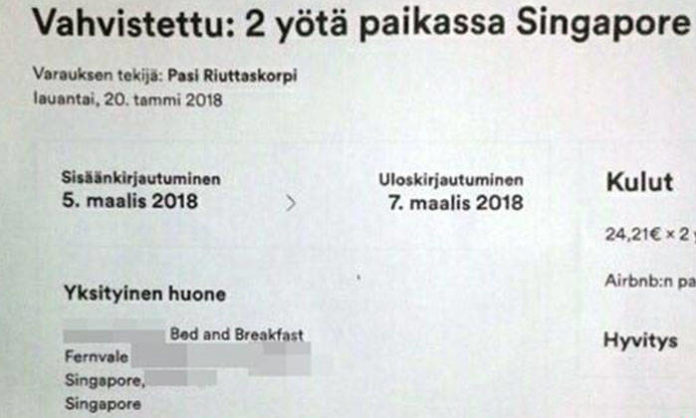
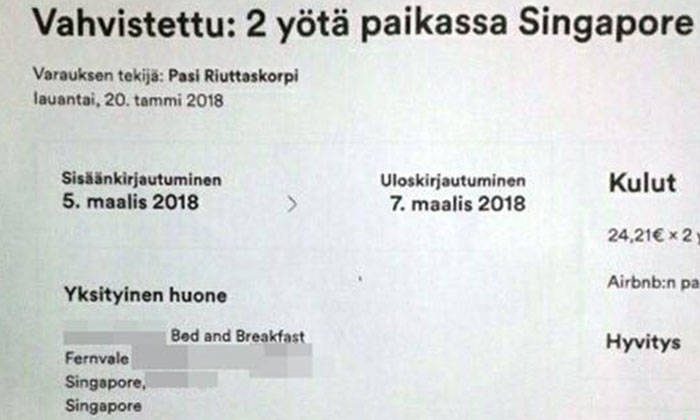
He said: “Those two tourists directly passed me an invoice retrieved from Airbnb that had the address on it.
“When I found out that this was a Housing and Development Board (HDB) flat, I started feeling that something was wrong.
“I remember that according to regulations, it is illegal to lease out HDB flats for short-term stays.”
After taking a look at the invoice, Mr Hong told the tourists that the destination they were headed to was not a hotel, nor was it a residential unit allowed for short-term stays under the regulations.
However, the tourists replied that the owner of the flat was also staying in the flat with them.
Mr Hong continued: “When we arrived at Fernvale Link in Sengkang, I realised that the place was really an HDB flat. I started questioning myself if the regulations have changed.”
Reporters later found a listing of the unit based on a photo of the invoice sent by Mr Hong.
They discovered that the owner charged $42 a night for one room, and there were 45 positive reviews on the listing.
After that, the reporters paid a visit to the flat.
The female owner of the flat said that she was unclear if this was against regulations, and thought that it was fine for her to rent out her room.
She said: “We looked at the Airbnb website and found that so many other people renting out their houses.”
When reporters searched on Airbnb for the listing again on Wednesday (March 7), they found that it had been taken down.
A Singaporean national received a sentence of 13 years’ imprisonment and a Rp 100 million (S$9,600) fine for sexual assault in Batam on Thursday.
The man, Mohammad Asri bin Sapuan, 46, was found guilty of assaulting three minors in September 2017.
His victims, aged 12, 15 and 16, previously took art courses at Mohammad’s house in Batam.
The parents of one of the children grew suspicious of Mohammad after reading a text message in their child’s cellphone. Following a discussion with their child to find out more information about Mohammad, the parents filed a police report.
He was arrested in October 2017.
Judges found him guilty of violating Article No. 76/2014 on child protection.
He was also found guilty of overstaying his visa while in Batam. The police said his passport was last stamped by the immigration office on Jan. 30, 2014.
Mohammad, who fell into tears after the sentence was read, said he was ready to accept his punishment.
The Agri-Food & Veterinary Authority (AVA) has recalled all rockmelons imported from Australia as a precautionary measure over an outbreak of human listeriosis.
New information from Australian authorities suggest that more contaminated rockmelons had been exported to Singapore. The whole rockmelons, or cantaloupe, from the specific Australian grower have been linked to an outbreak of human listeriosis there, where four people have died.
AVA had earlier recalled two consignments of rockmelons from the implicated source.
Australian authorities confirmed that the farm had stopped production on Feb 23 and that there are no other affected farms in Australia.
Rockmelons linked to Australia listeria outbreak were sold in Singapore but have been recalled: AVA
//afarkas.github.io/lazysizes/lazysizes.min.js
AVA said it will continue to work with the Australian authorities on this matter. It added that earlier samples of locally sold rockmelons have been sent for food safety tests, including testing for listeria. The results are pending.
Listeriosis is a bacterial infection caused by Listeria monocytogenes. The bacteria is found in the environment, such as soil, water, effluents and the faeces of humans and animals.
Food items which could be contaminated by the bacteria include raw or ready-to-eat foods, such as raw (unpasteurised) milk or raw meat and their products, seafood, and fresh produce including fruits and vegetables.
A person with mild listeriosis usually has fever and muscle aches, preceded by diarrhoea or other gastrointestinal symptoms.
Fourth person dies in Australia from contaminated rockmelon
//afarkas.github.io/lazysizes/lazysizes.min.js
There have been no reported cases of listeriosis linked to consumption of rockmelons in Singapore, said the AVA.
It advised food retail establishments to temporarily stop the sale of rockmelons or the use of rockmelons in dishes prepared for public consumption with immediate effect until further notice.
This applies to rockmelons from Australia. However, if retailers are unsure of the source of their rockmelons, they should also stop the sale or use of such rockmelons as a precaution, advised AVA.
Consumers who have purchased rockmelons from Australia, or are unsure of the source of the rockmelons purchased, are advised not to consume them. Consumers who do not feel well after consumption of rockmelon should seek medical attention.
a1admin@sph.com.sg
Singapore
Friday, March 9, 2018 – 09:40
More about
bacteria Contamination AVA (Agri-food & Veterinary Authority of Singapore) recall
SINGAPORE: Moving along without the United States, the remaining 11 countries of the Trans-Pacific Partnership (TPP) on Thursday (Mar 8) signed a new version of the multilateral trade pact, resuscitating a landmark deal that would slash tariffs and foster trade in a market with a combined output of US$10 trillion (S$13 trillion).
The inking of the Comprehensive and Progressive Agreement for TPP (CPTPP) in Chile followed the conclusion of talks in January and marked a turnaround of fate after Washington’s withdrawal a year ago left it in limbo.
“The CPTPP will establish a new standard for other regional economic integration agreements, and even for future negotiations in the WTO (World Trade Organisation) and in APEC (Asia-Pacific Economic Cooperation),” said Chile’s foreign ministry.
“We’re very proud to show the world that progressive trade is the way forward,” said Canadian Trade Minister Francois-Philippe Champagne as officials gathered for the signing ceremony.
Here’s what you need to know about this latest trade pact:
Q: WHAT IS THE CPTPP?
The CPTPP, also dubbed the TPP-11, was negotiated by Australia, Brunei, Canada, Chile, Japan, Malaysia, Mexico, New Zealand, Peru, Singapore and Vietnam.
Officials from the 11 member nations first reached a broad agreement last November to move ahead with the renamed trade pact, not without overcoming some last-minute resistance from Canada, before finalising negotiations in Tokyo about two months ago.
The revived deal will look to reduce tariffs in economies that together represent 500 million people and account for 13.5 per cent of global gross domestic product (GDP) – equivalent to a total of US$10 trillion.
The original TPP, with the participation of the US, would have covered 40 per cent of the world economy worth US$28 trillion. It was signed on Feb 4, 2016, following six years of talks, and was hailed as setting a new standard for global trade.
However, nearly a year later, the US withdrew from the trade pact as part of President Donald Trump’s “America First” agenda to protect domestic jobs. Due to the TPP’s legal requirements, the agreement cannot enter into force without the US and the remaining 11 countries, led by Tokyo, resumed talks to keep the deal alive.
Q: HOW IS IT DIFFERENT FROM THE TPP?
With the exclusion of the US, the CPTPP is putting on hold 20 provisions even as it incorporates the original TPP text by reference.
Out of which, 11 of the suspended clauses are related to intellectual property (IP) originally inserted at the demand of US negotiators. The other nine involve areas like investment, financial services, copyright, telecommunication and government procurement.
An agreement by all 11 members would be needed for these provisions to take effect in the future.
Dr Deborah Elms, founder and executive director of the Asian Trade Centre, described the suspensions as “minor tweaks” that few will notice, particularly given how the IP-related clauses were US-driven.
These include provisions that gave data protection to new pharmaceutical products and biologics. The latter was a “hot button issue” that the US had aggressively pursued during the negotiations.
“Most chapters have no changes at all and some of the changes involve just three words or a sentence,” she told Channel NewsAsia over a phone interview. “They are really quite minor.”
Mr Christopher Corr, a counsel at international law firm White & Case, said the suspensions resulted in a “less robust agreement” though the CPTPP will still have a “major, beneficial impact on trade in the region”.
This is because it still includes “important ‘new era’ rules” that facilitate e-commerce, cross-border trade in goods and services, investment, as well as new disciplines on state-owned enterprises, environmental protections, labour rights and good governance.
“That agreement now stands as a new best practices precedent for others to emulate and build from,” Mr Corr added.
Q: WHAT DOES IT MEAN FOR SINGAPORE?
For one, new market access into countries, like Canada and Mexico, where Singapore does not have free trade agreements (FTAs) with, according to the Ministry of Trade and Industry (MTI).
The trade deal will also boost regional economic integration, paving the way for “stronger and better linkages” between Singapore and valuable sources of investment and technology in Japan and other advanced economies.
The CPTPP also covers important markets and production bases for Singapore firms with its inclusion of some of the world’s fastest-growing economies and the country’s trading partners, such as Malaysia, Japan, Vietnam, and Australia.
MTI noted that CPTPP member countries in 2017 accounted for 22.2 per cent of Singapore’s total goods trade, which came to S$214 billion.
Singapore’s Prime Minister Lee Hsien Loong attends the Trans-Pacific Partnership (TPP) meeting held on the sidelines of the APEC summit in Danang, Vietnam, November 10, 2017. REUTERS/Na-Son Nguyen/Pool
Trade minister Lim Hng Kiang said in January that homegrown companies will gain from the substantial elimination of tariffs and non-tariff barriers for goods, better access for service suppliers in a wide range of sectors, greater facilitation of investments and improved access to government procurement contracts.
One company that is looking to tap on the CPTPP as an “icing on the cake” is Ademco Security Group.
The homegrown security solutions provider hopes the trade deal can break down barriers in Malaysia and Vietnam where protectionist measures remain firmly in place within the security industry.
“Currently, licenses in these two countries for provision of security service, like guarding and alarm monitoring, are somewhat restricted for foreign-owned companies,” group managing director Toby Koh said. “I hope that the CPTPP will open up a whole new potential segment of the security industry to us.”
Given how the company has business operations in both Southeast Asian countries, the tax relief under CPTPP will also be a “nice to have”, added Mr Koh.
Q: WHAT’S NEXT?
Individual member countries will now begin their respective domestic ratification processes and the CPTPP will enter into force after at least 50 per cent of the signatories complete that.
Analysts that Channel NewsAsia spoke to are hopeful of a quick process even as Malaysia has said that it will not be among the first countries to ratify the trade deal by early 2019.
“As negotiations were successfully concluded recently in January 2018, ratification under this threshold by 2019 is not expected to be a problem,” Mr Corr said.
“Once that happens, Malaysia and Singapore companies will have a distinct advantage in the CPTPP region over competitors in other ASEAN countries, and they should start planning to take advantage of that now.”
Other countries could also be mulling becoming new members of the agreement. Yonhap news agency reported on Thursday that South Korea’s trade ministry will be looking at the CPTPP’s impact on its economy before deciding whether to join the trade pact within this year.
US President Trump also said previously that he would be open to re-joining the trade deal if it involved a “better deal” for the US, but joining the CPTPP would need to win the support of all the existing members.
Q: AMID TRADE WAR FEARS, WHAT DOES THIS MEAN?
Observers described the signing of the CPTPP this week as “rare good news” that will “stand in stark contrast” to recent heightened fears about a tit-for-tat trade war.
Concerns over the likelihood of a global trade war have intensified over the past week after US President Trump announced plans to impose stiff tariffs on steel and aluminum imports. That had sparked strong opposition from most of its major trade partners, with Europe and China warning that they would respond in the event of a trade war with the US.
Despite having some of its limelight stolen by recent developments, the CPTPP’s signing will still send a strong signal on free trade, stressed Dr Elms.
“(Recent events) shouldn’t overshadow the importance of what other parts of the world, especially Asia, have been up to in terms of opening markets and continuing to push forward more sensible policies on trade.”
For Mr Corr, the CPTPP will be a “stark contrast to recent troubling protectionist actions”.
Citing the example of how US firms will likely be feeling the pain of withdrawal after the CPTPP goes into effect, he elaborated: “One hopes the prospect of this will lead the US to re-engage in TPP and will serve as an example to others of not only the benefits of joining trade agreements, but also the costs of not joining.”
The formalising of the CPTPP could also help to speed up ongoing negotiations for the Regional Comprehensive Economic Partnership (RCEP) which, if approved, will cover nearly 3.5 billion people and one-third of the world economy.
First conceived in 2012, the 16-nation multilateral trade pact involves the likes of China, Japan, India, South Korea, Australia and New Zealand. Among them, seven are CPTPP members, namely Australia, Brunei, Japan, Malaysia, Singapore, New Zealand and Vietnam.
Dr Elms noted that countries that are out of the CPTPP could feel the “competitive challenge” to conclude the RCEP soon.
The uncertainties about global trade could also spur progress, she added.
“If you can’t rely on the US or end up with some protectionist barriers being raised in the Europe, US or even China – all of which are important final markets for everyone in Asia – that would be deeply problematic,” Dr Elms told Channel NewsAsia.
“So at the minimum, if you can have better markets within Asia, that would be a better fall back plan to have.”
SINGAPORE: Back in 2016, a report of a roof collapse at the Housing and Development Board project Punggol Waterway Terraces, with a photo of the upper storeys in a crumbled state, set social media abuzz.
Reports that Singapore’s Foreign Minister Vivian Balakrishnan had collapsed during a United Nations summit, and that a Filipino family had caused a scuffle during a Thaipusam procession, had the same effect.
But which ones were real and which were not?
In the case of the roof collapse, the police, the Singapore Civil Defence Force as well as HDB and town council officers rushed to the scene, only to learn that it was fake news – wasting resources and causing alarm. The other two reports were also false.
Such “deliberate online falsehoods” intended to mislead the reader will be the subject of a public hearing starting next Wednesday, which a Select Committee will hold to examine the threat of fake news and whether new laws are needed.
A government poll last year found that 75 per cent of respondents had read fake news at least occasionally, and 25 per cent had shared information they later discovered to be false.
And as the Mediacorp programme Talking Point discovers, the limits of possible fakery are being stretched, making it harder to weed out the frauds.
TODAY’S TECHNOLOGY CAN DECEIVE
A lot of online falsehoods are being made to look legitimate through sophisticated machinery, with bots and fake accounts that like, retweet and comment on fake news.
As Singapore University of Design and Technology media and communication professor Lim Sun Sun explained, purveyors of misinformation are using techniques similar to those used to generate real news, which is why many fall for fake news.
“They’d use the same style of expression (and) headlines. They’d also buff up their stories with heavily doctored and manipulated videos and photographs,” she said.
With today’s emerging technologies, such as face trackers and voice synthesisers, one can even create a fake video of what a person is saying or doing.
National University of Singapore communications and new media associate professor Lonce Wyse said:
With artificial intelligence, we’re able to create media entirely … with a very realistic look and feel to it.
“For example, we can train our (computer) network on thousands of faces so it learns to understand … how mouths moves and how our eyes blink, and then map one person’s face onto another person’s face.”
In that way, even a person’s actions can look as if another person is performing them. And one need not look far for tools to put together a fake speech: Editing software can make a manipulated video look real.
TRIGGER-HAPPY SHARING
Social media makes the problem worse because of its social factor, whereby being the first to share breaking news thought to be of interest to one’s friends may be seen as something welcomed.
People therefore tend to be “trigger-happy”, said Dr Lim, who is researching the reasons people are unable to distinguish between fake and real news.
“In the online environment, falsehood tends to get momentum very quickly,” she added.
The more it gets repeated, the greater the likelihood of people believing it to be true. This is the phenomenon known as the illusory truth effect.
There is also the optimism bias phenomenon, whereby people are overly confident in their ability to tell real news from fake.
“Then you let your guard down … You share it without thinking (and) discover later that it might be fake,” said Prof Lim.
CONSEQUENCES CAN BE SERIOUS
Ms Francesca Nathan, a Fake News, Lies and Spins Course instructor at the NUS, believes it is important to understand the dangers of misinformation.
Singapore is especially vulnerable, with different races and communities living close to each other, she said. And fake news could push these communities apart.
For example, the fabrication in 2015 that a Filipino family’s complaints had sparked a scuffle between the police and Thaipusam participants set off a flurry of xenophobic reactions among netizens.
“When you have communities distrusting each other, believing that one group has certain advantages or an agenda against them, that could cause distress,” said Dr Nathan. “By inciting those kinds of strong feelings, you can pit one community against another.”
And fake news can be created not only by individuals but also by groups, companies, even foreign governments.
Mr Benjamin Ang, who heads the Cyber and Homeland Defence Programme at the Nanyang Technological University, said a country can use fake news to drive a wedge between the different races, religions or economic classes of another country, destabilising it.
Between 2015 and last year, 126 million American Facebook users were said to have been exposed to more than 80,000 posts from 470 accounts reportedly controlled by a foreign country that wanted to meddle in the United States Presidential Election.
(File Photo: AFP)
Even fake news of a stock market crash could be almost as bad as an actual crash, said Mr Ang, as the misinformation could become a self-fulfilling prophecy.
“News of a bank running out of money is almost as bad as the bank actually running out of money because it could make it happen when people panic and they … make a run on the bank,” he added.
DEALING WITH THE PROBLEM
The potential fault lines here are not the only reason Singapore is vulnerable to fake news.
“In some ways, we’re very trusting because we’ve been safe for so long,” said Mr Ang. “We don’t really stop to suspect when we receive information.”
The Government’s response to the issue has been to task the Select Committee, formed in January by Parliament, to recommend solutions.
The committee is headed by Deputy Speaker Charles Chong and includes seven members from the People’s Action Party, one from the Opposition and one Nominated Member of Parliament.
Members of the Select Committee (clockwise from top left): Senior Minister of State Janil Puthucheary, Workers’ Party MP Pritam Singh, Deputy Speaker Charles Chong, Minister K Shanmugam, MPs Rahayu Mahzam, Edwin Tong, Seah Kian Peng and Sun Xueling, NMP Chia Yong Yong and Minister Desmond Lee.
Ms Sun Xueling, one of the PAP MPs in the committee, said it will be exploring the potential consequences of fake news and the possible measures to be taken, among other things.
She is the MP for the area where Punggol Waterway Terraces is located, and she recalled feeling “quite alarmed” as she hurried there after seeing the news appearing on her Facebook feed.
It was a few days before she was due to give birth.
“When I saw the picture, it looked very real to me … People were obviously distracted by it,” she said. “I remember thinking to myself (while driving there) that whatever it is, don’t deliver (the baby) in the car.”
When asked about speculation that any new laws created could be used to silence government critics, Ms Sun said she understood those concerns
“Whatever the measures … the underlying principle has to be that they’re to target online falsehoods – deliberate online falsehoods – not honest opinions, not honest commentaries,” she said.
“I think all of us want to see real, accurate information online.”
Watch the programme Talking Point here. New episodes every Thursday on Mediacorp Channel 5.
Mr Sim Wong Hoo, the founder of the Singaporean company who brought the world the default standard for consumer audio in PCs in the 90s, is obviously excited. Since the SoundBlaster, Creative Technology has not really had a major hit, but its new innovation could be the chance for the company to rejoin the big leagues.
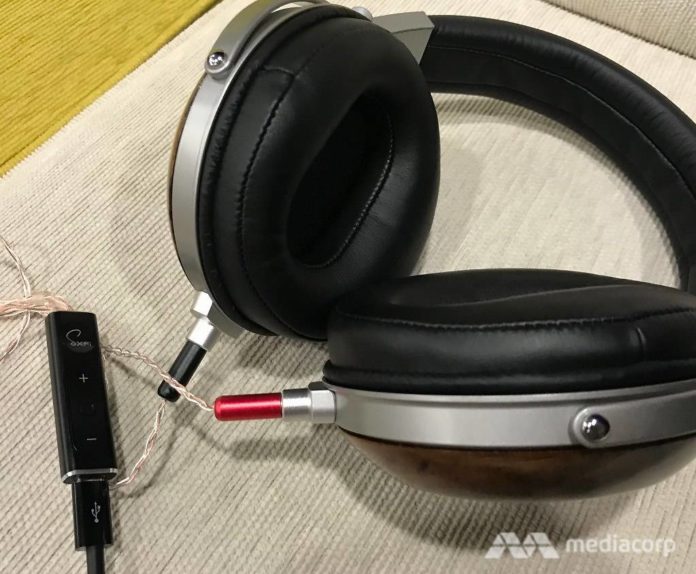
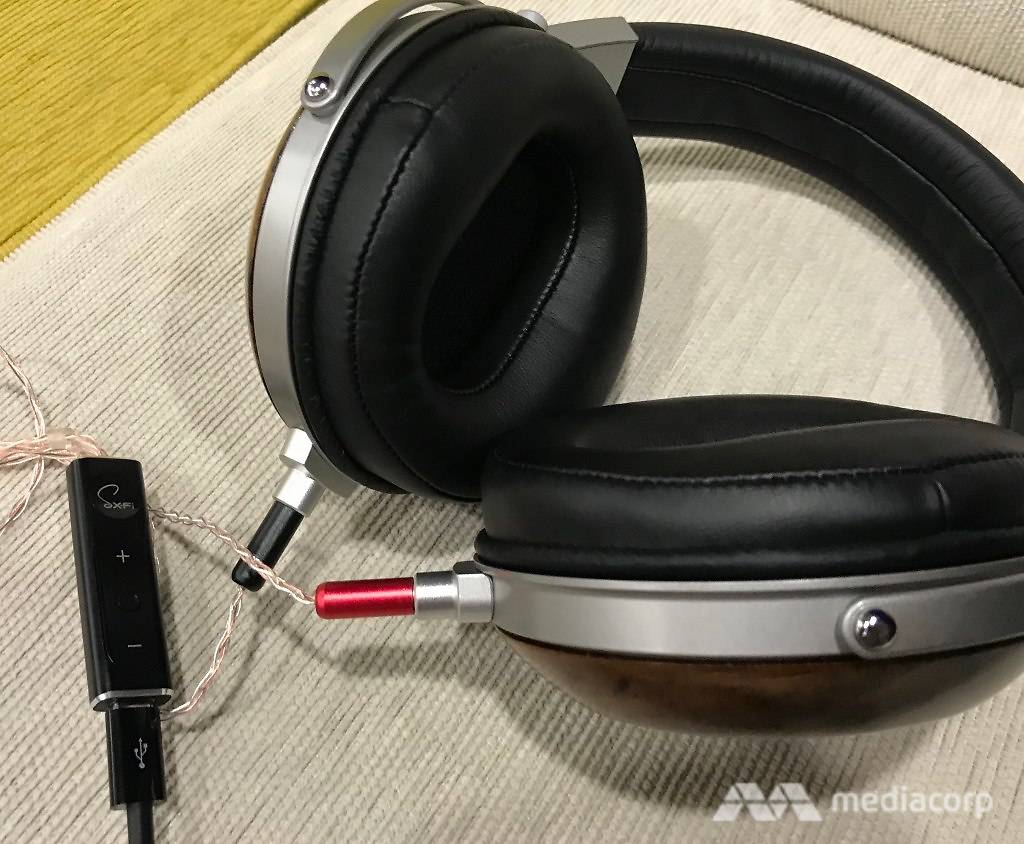
On Wednesday (Mar 7), Mr Sim presented to reporters and analysts what he hailed as the “holy grail” of the audio industry at the company’s Jurong East headquarters. Called the Super X-Fi, Creative’s latest innovation is not a headphone nor a software.
Rather, it is a technology that can be used in headphones and dongles for mobile devices that is meant to recreate the listening experience of a multi-speaker surround sound system.
“The whole industry has been hunting for it,” said Mr Sim.
The founder said the project has been 20 years and more than US$100 million in research and development (R&D) outlay in the making – all in an effort to create a realistic and immersive audio experience for the user.
The response to the new innovation has thus far been mostly positive, with Creative receiving a Best of CES 2018 award at the electronics trade show in Las Vegas in January.
Investors are also seemingly impressed with the technology as well, helping send Creative’s share price soaring to levels not seen since 2007 on the Singapore stock market.
“I’ve a confession: We sell tons of headphones (but) I don’t use them,” Mr Sim shared. The existing ones in the market today are “stressful”, he added, saying the brain probably has to compensate for the audio technology’s inability to fully recreate a realistic enough sound.
He likened this to myopia. For someone with the condition, taking off the spectacles means having to squint in order to see something unless brought up close. This requires brain power too, and it is stressful on one’s eyes, he explained.
AI A “CRITICAL PIECE”
So what’s the solution, as Creative sees it?
The Super X-Fi dongle, which will cost US$150, will help give any earphone the immersive sound experience, Creative touted.
Mr Sim said that the Super X-Fi technology works in tandem with a free app – which is expected to be released in the second quarter of this year – that customises a sound profile for each user through scanned images of the ears and faces.
The bone structure of one’s face, as well as how sound enters the ear, affect how sound is received by an individual, and the technology aims to recreate ambient sound unique to that person.
The computation of such a large data set to create a person’s sound profile is done using artificial intelligence (AI) – something the CEO said Creative got into “years ago” without going into specifics. “There’s so much data, if we don’t use (AI), we will die.”
Additionally, the team has created a database of existing earphones in the market so that the sound profiles can be mapped on to the earphones for the “magic of headphone holography”, as the company touted.
“AI is a critical piece” of the Super X-Fi offering, Mr Sim said, when asked what differentiates this technology from current offerings on the market.
A “complex algorithm” is then used to “compute in real time an inverse function of what external sounds will sound like uniquely for an individual’s ears”, he explained.
What followed were countless cycles of trials, tests and retests, and even in the days leading up to this year’s Consumer Electronics Show (CES), the entrepreneur was not convinced that the technology was up to scratch, and had asked for it to be tested by employees internally.
Validation from those who tried Super X-Fi soon followed though, Mr Sim said, who highlighted comments from a stage engineer.
This engineer, Mr Sim said, had re-created the stage for American rock band Steely Dan during a concert years back, and when he heard the band’s song played during the demo, he felt as if he was back at the scene again.
LEARNING FROM PAST LESSONS
With Super X-Fi generating much interest post-CES and its share price hitting the high notes – Creative touched an 11-year high of S$10 on Wednesday – Mr Sim said that the company is ready to “run like hell” to cash in on its invention, much like it did with the SoundBlaster all those years ago.
It plans to launch the free app in the second quarter of this year, which will allow users to experience the touted sound experience with downloaded content but not streaming services such as Spotify and YouTube.
Creative also plans to release a dongle, which will retail at US$150 (S$197.20), the following quarter, while a wireless headphone is planned for the fourth quarter.
Plans are also in place to collaborate with hardware manufacturers to include the technology in phones, PCs, laptops, TVs, sound bars, Blu-ray players, Mr Sim added.
A close-up look at the Super X-Fi chip designed by Creative Technology.
This strategy is in part distilled from lessons of the past, Mr Sim acknowledged, citing the SoundBlaster as an example.
He said that he had previously wanted to sell the chips behind the SoundBlaster technology. However, each time he brought up the topic, others would advise against the idea, saying that doing so would only breed more competition.
Competition came anyway, which whittled away the company’s revenue base, he added.
Asked what the most urgent thing is for the company to do now, the CEO said that it would be to have 50 million people use its free app in the next two years. The number is “arbitrary”, he added, but it is a milestone to signal the product has “graduated”.
One analyst who gave his take on Super X-Fi said that its “plug-and-play capabilities and the customised listening experience” have not been seen in the market. DBS Vickers analyst Sachin Mittal said in his report on Mar 1 that the plug-and-play feature would also be of “strong appeal to the virtual reality community”.
Mr Mittal wrote: “We assume that Super X-Fi would be able to capture a 0.5 per cent market share of the global headset market in FY20 ended June, resulting in sales of US$232 million.”
That said, his risk assessment is “high” based on considerations such as whether Creative will be able to replicate test lab results in real life, and how negative online reviews of the product when launched may impact adoption rates.
Mr Sim, too, acknowledged that Creative needs “a lot of people to test” the app and, by extension, the Super X-Fi technology, to assess the consistency of experience.
That does not mean he isn’t excited though.
“When (Creative) went IPO, and I became a paper millionaire, I was like: ‘OK lor’,” he said. “(But with Super X-Fi), I’ve never been so excited in my life.”
If Super X-Fi does live up to the growing hype, Mr Sim’s excitement could get contagious.
Singapore – A “sudden turn” by the American warship USS John S. McCain led to a collision with a tanker last year off Singapore that left 10 sailors dead, a report by the city-state’s government said Thursday.
Singapore’s transport ministry, releasing the results of its investigation into the incident, said a “series of missteps” by the destroyer’s crew and insufficient action by those of the tanker, the Alnic MC, contributed to the accident.
The vessels smashed into each other in the predawn hours of August 21, 2017 in the busy shipping lanes around the Strait of Malacca. There were no casualties among the tanker’s crew.
The commander of the John S. McCain is facing charges including negligent homicide and dereliction of duty, the US Navy said in January, after its own investigation into the incident found “multiple failures” by the ship’s crew.
Singapore said its 35-page report did not blame any organisation or individual for the fatal crash, but found the warship made an abrupt turn after a transfer of controls caused confusion among the crew.
“The collision… happened because of a sudden turn to port (left) by JSM (John S. McCain), which caused it to head into the path of the (tanker),” the report said.
It also noted that several sailors on watch at the John S. McCain during the collision had been assigned from another warship with steering control systems that were “significantly different”.
“These differences were not compensated for. Inadequacies in training and familiarisation before the task allocation may have contributed to the actions on John S. McCain,” it said.
The collision took place within three minutes of the warship’s sudden turn, it said, adding however that the actions taken by the tanker’s crew “were insufficient to avoid” the smashup.
“When the bridge team of Alnic MC saw the USS John S. McCain turning, it presumed that the (warship) would be able to safely pass ahead,” it said.
The incident came after another destroyer, the USS Fitzgerald, smashed into a Philippine-flagged cargo ship off Japan in June 2017, leaving seven sailors dead.
In a report on the two separate collisions, US Chief of Naval Operations Admiral John Richardson said both were “preventable and the respective investigations found multiple failures by watch standers that contributed to the incidents”.
The US Navy said in November that the John S. McCain collision “resulted primarily from complacency, over-confidence and lack of procedural compliance”.
“In particular, McCain’s commanding officer disregarded recommendations from his executive officer, navigator and senior watch officer to set sea and anchor watch teams in a timely fashion,” it said.
He said that grassroots advisers are appointed by the Government of the day to guide PA grassroots organisations to promote social cohesion and to connect people and government.
People’s Association deputy chairman Chan Chun Sing in Parliament.
(Updated: )
Bookmark
SINGAPORE: The People’s Association (PA) is a statutory board that supports the elected government of the day in implementing its policies and programmes, said its deputy chairman Chan Chun Sing in Parliament on Thursday (Mar 8).
The PA’s mission is to promote social cohesion and racial harmony and to connect people and government, he said during the Committee of Supply debate of the Ministry of Community, Culture and Youth.
The PA also explains and gathers feedback on government policies so that “we can be a responsive and responsible government” he said, adding that grassroots advisers are appointed to guide PA grassroots organisations in carrying out this mission.
This includes explaining “difficult and sometimes unpopular policies that are necessary for the future of Singapore” such as the impending GST hike and foreign manpower policies.
“We do not presume that opposition MPs believe that he would be willing or able to execute this role for the Government of the day,” said Mr Chan, who is also Minister in the Prime Minister’s Office.
He was responding to questions from Workers’ Party MPs Pritam Singh and Muhammad Faisal Abdul Manap.
Workers’ Party MP Muhammad Faisal Abdul Manap in Parliament.
Mr Faisal asked whether there was conflict of interest and “politicalisation” when PAP candidates who stood for elections and lose act as grassroots advisers.
He also asked if there were similar issues involved when a letter is written for a resident from an opposition party ward by a grassroots adviser who is also a “political party branch chairman”. The letterhead used for this letter bears the name of the political party, he added.
Mr Singh had asked about the role of Community Development Councils (CDCs) – overseen by PA – and the nature of the relationship between opposition town councils and CDCs.
Following his explanation, the MPs sought clarifications. Mr Singh gave the example of banners put up to convey festival greetings to residents, and asked if an opposition-run town council can tap some kind of “co-funding” for putting up those banners, as they sometimes include the logos of the town council and CDC.
Workers’ Party MP Pritam Singh in Parliament.
In response, Mr Chan said: “Government agencies do not fund political outreach for any political party. Government agencies will work with various community partners to serve the needs of community.”
WP chief Low Thia Khiang then said: “Grassroots advisers, or PAP MP, or prospective PAP candidates, or appointed grassroots advisers, or previous candidates of PAP heading activities on the ground – are these activities not considered political outreach?”
Mr Chan went on to draw a distinction between political outreach and impact.
Using Sports Singapore as an example, he said its core purpose is to “inspire the Singapore spirit and transform Singapore through sport”. The body conducts activities on the ground with community partners, but it is not being political, Mr Chan said.
Workers’ Party MP Low Thia Khiang in Parliament.
“When the statutory boards and Government agencies do their work properly, and do their work well, does it have a political impact? The answer is obvious,” he added.
As a Spice Girls reunion has been up in the air for years, the possibility of the girl group coming together seemed to solidify when they were supposedly invited to the royal wedding.
“I’ve met Prince Charles lots of times. I’m going to ask him where my invite is because I haven’t got mine yet, obviously Mel B said she has hers,” she quipped.
“There are no plans to go to the wedding at the moment.”
Fans would be doubly disappointed to know that once again, hopes for a reunion have been dashed as Victoria Beckham, a.k.a Posh Spice, isn’t committed to performing with the pop group.
The four remaining members-who include Emma Bunton (Baby Spice) and Geri Halliwell (Ginger Spice)-won’t go through with the reunion unless they’re complete.
“We’re all just dead busy. So if anything were to happen, it wouldn’t be now,” Beckham said.