Home Blog Page 1059

PM Lee to attend Commonwealth Heads of Government Meeting in London

0

The meeting, which is themed “Towards a Common Future”, will be attended by leaders from 53 countries.

PM Lee file (1)

Singapore’s Prime Minister Lee Hsien Loong. (File photo: MCI)

SINGAPORE: Prime Minister Lee Hsien Loong will attend the biennial Commonwealth Heads of Government Meeting (CHOGM) in London from Thursday (Apr 19) to Friday (Apr 20).

According to a press statement from the Prime Minister’s Office, Mr Lee will also have bilateral meetings with other Commonwealth leaders on the sidelines of CHOGM.

The meeting, which is themed “Towards a Common Future”, will be attended by leaders from 53 countries.

At the meeting, leaders are expected to discuss global and regional issues of concern, such as weak global trade and investment flows, and the effects of climate change on small and other vulnerable states, and review developments in the Commonwealth.

This is the fourth time the UK will be hosting CHOGM, which takes place every two years in different Commonwealth countries.

Under consideration by leaders at this year’s CHOGM are a Commonwealth Blue Charter on ocean governance, a Commonwealth connectivity agenda for trade and investment, a declaration on cybercrime and revised Commonwealth guidelines on election observation in member countries.

Mr Lee will be accompanied by Mrs Lee, Minister for Foreign Affairs Dr Vivian Balakrishnan, as well as senior officials from the Prime Minister’s Office, Ministry of Communications and Information and Ministry of Foreign Affairs.

During the Prime Minister’s absence, Minister for Trade and Industry (Trade) Lim Hng Kiang will be Acting Prime Minister from Wednesday (Apr 18) to Saturday (Apr 21). 

Source link

Tembusu tree accident: Inquiry into death of woman ends, findings due on Apr 30

0

SINGAPORE: An inquiry into the death of a 38-year-old woman killed by a Tembusu tree at the Singapore Botanic Gardens last February concluded on Tuesday (Apr 17).

Indian national Radhika Angara was with her husband and one-year-old twins when the massive 40m tree uprooted, injuring her family and one other person.

The four-day inquiry, spread out over about nine months, had revolved around why the 270-year-old heritage tree, last inspected in September 2016 and deemed healthy, would collapse.

At the close of the inquiry on Tuesday, Ms Angara’s father stood up to say a few words about the daughter he lost. She was “a young mother out on a pleasant day for a picnic with her babies”, he said.

It was a tragedy that could have been prevented “with some vigilant action” on the part of NParks, the father told the inquiry, which was also attended by Ms Angara’s mother, sister and husband.

“People have lost out,” he said, adding that a young father was widowed, a sister lost her friend and soulmate, and he and his wife will bear the burden of outliving their daughter.

The family pulled out portraits of the twin boys and set them on the table as the man spoke: “Two little children will never know how much their mother loved them.”

Tembusu tree 2

The Tembusu tree that fell was more than 270 years old and predates the establishment of the Singapore Botanic Gardens.

Among the witnesses at inquiry, which started in July, were three arborists and two NParks employees in charge of arboriculture at the Singapore Botanic Gardens.

Senior Counsel Chelva Rajah, who is representing Ms Angara’s family, quizzed NParks’ director of streetscape Abdul Hamid on why the tree was not more closely examined for faults and how it could have collapsed “for no apparent reason”. 

The director, who is also an arborist, had testified that there were no external signs or symptoms of an internal decay, which was discovered only when the Tembusu tree fell, crushing Ms Angara.

When the tree uprooted, arborists observed that about 70 to 75 per cent of the tree’s roots, deep underground, were decayed or dead.

The Singapore Botanic Gardens’ deputy director Elango Velautham and senior manager Thaddeus Cheng had also testified, along with independent arborists Derek Yap of Camphora and Richard Gordon Thomas of ArborCulture.

Coroner Marvin Bay is expected to deliver his findings on Apr 30.

Source link

Acacia welfare home opens new facility in Admiralty for destitute elderly men

0

SINGAPORE: A new welfare home to help elderly destitute men was officially opened on Tuesday (Apr 17) by the Ministry of Social and Family Development (MSF).

Located in Admiralty, Acacia Home aims to reintegrate its residents back into the community by facilitating job placements and housing arrangements. 

Many of the men at the home have little to no savings, are unable to afford their own homes or are estranged from their families, said the superintendent of Acacia Home Regine Chan.

In such cases, they are referred by social services to the home, which is run by Sathya Sai Social Service. 

The home is able to take in up to 250 elderly destitute men, up from its capacity of 100 at its previous interim location at Kaki Bukit Centre. 

Currently, the Admiralty facility is home to 110 residents aged between 55 and 88, who are referred to the home by MSF. Such welfare homes were established under the Destitute Persons Act for the reception, care and rehabilitation of destitute persons, according to the MSF website.

Besides shared facilities like laundry areas, bathrooms and four to eight person-dormitories, the building also features a mock-up of a one-room rental flat to give residents an idea of how to navigate a home living space. 

Acacia Home opening 8

A sleeping area in Acacia Home. (Photo: Deborah Wong)

Last year, about seven residents secured employment while five cases successfully moved into rental flats.

Ms Chan said residents who show potential to be discharged will stay in pairs in the mock-up space for around three months. 

If they can live well together, the home will help them apply for a rental flat unit under the Joint Singles Scheme.

Acacia Home opening 7

Interior of Acacia Home. (Photo: Deborah Wong)

It also offers rehabilitative programmes such as addiction management and life skills therapy. Those with mobility issues can participate in physical wellness programmes like physiotherapy and gait training. 

Acacia Home opening 9

The library in the welfare home. (Photo: Deborah Wong)

Speaking at the home’s official opening, Minister for Social and Family Development Desmond Lee emphasised the importance of community involvement.

“We partner employers and businesses nearby to offer job opportunities for residents, to ease them into external employment and eventually, independent living,” he said. “The close involvement of our community partners will help foster a sense of community belonging in residents. This will ensure that their reintegration to society is as seamless as possible.”

Acacia Home opening 6

The home currently houses 110 residents. (Photo: Deborah Wong)

Acacia Home opening 5

Exterior of Acacia Home. (Photo: Deborah Wong)

There are 1,823 destitute people living in welfare homes as of the end of last year. 

Admission to a welfare home is a last resort and carried out only after a person has exhausted other avenues such as community-based care options, stated MSF on its website.

Those who are assessed to be capable of independent living, or who have willing caregivers, are discharged to the community. Residents may also be discharged to sheltered homes and senior group homes.

Admission to welfare homes is statutory and under the provisions of the Destitute Persons Act, according to MSF.

Under the Act, a destitute person can refer to a someone found begging in public in such a way as to create a nuisance, or to an “idle person” found in a public place with no “visible means of subsistence or place of residence”, or who is unable to give a satisfactory account of himself.

Source link

MyCareersFuture.sg replaces Jobs Bank as landing page for jobseekers

0

The new portal for jobseekers will focus on identifying jobs that are relevant to their skills; Jobs Bank will continue its role for employers to list job offers.

MyCareersFuture portal

New jobs-matching site MyCareersFuture.sg. (Photo: Fann Sim)

SINGAPORE: A new Government job-matching portal, MyCareersFuture.sg, was launched on Tuesday (Apr 17) and it will replace Jobs Bank as the landing page for jobseekers. 

MyCareersFuture.sg will provide a more advanced search function for jobseekers which includes a feature that shows a percentage score of the skills match between a jobseeker and a job, and the number of applications a job posting has received. 

It also shows adjacent jobs that require similar skills that jobseekers may not have considered before to reduce missed matches. 

Using machine learning and text analysis, the portal picks up keywords as skills from multiple sources of ad postings of the same job. An upcoming feature which will be implemented later this year will allow employers to indicate core skills needed for each role. 

Users can also use filters to only search for employers participating in government support programmes that, for example, support mature workers or those without relevant experience. 

These include programmes such as Career Trial, Professional Conversion Programme and Career Support Programme that provide jobseekers and employers with employment support such as training and wage subsidies when the jobseeker lacks relevant experience for the role. 

However, employers will have to continue using Jobs Bank to post job offers as the feature for employers will only be ready at the end of the year. 

Following that, Jobs Bank will be phased out for both jobseekers and employers and will exist only as a jobs repository. 

Jobs posted on Jobs Bank will be synchronised real-time to MyCareersFuture.sg. 

The portal was announced earlier this year during Josephine Teo’s Committee of Supply speech. The portal went live in January this year and has had 280,000 visitors. 

Workforce Singapore (WSG) is running a week-long Adapt and Grow roadshow which showcases the new portal at Suntec City starting on Monday. 

Source link

Zimplistic, company behind Rotimatic, raises S$39.3m in series C funding

0

SINGAPORE: The company behind the fully automated flatbread making machine, Rotimatic, announced on Tuesday (Apr 17) it has raised US$30 million (S$39.3 million) in a funding round led by Credence Partners and EDBI, the investment arm of Singapore’s Economic Development Board.

Zimplistic said the investment from both parties is “another strong endorsement” of the company and its flagship product. Currently, it has more than 30,000 customers who have made more than 15 million flatbreads, according to the press release.

With the injection in funds, Zimplistic said it will be directed towards converting the 25 per cent of the world’s population that eats flatbreads into users of its robot.  

“Flatbreads have to be eaten fresh and making them at home is tedious and requires skill. With people leading busy lifestyles, they have been forced to resort to frozen, unhealthy alternatives, or by replacing flatbreads with other forms of carbs,” the company said.  

“Rotimatic is the disruptive solution to this unaddressed problem,” it touted. 

Rotimatic is world's first fully automatic roti and flatbread making solution (1)

Rotimatic, by India-born Singapore citizens Rishi Israni and Pranoti Nagarka, uses artificial intelligence technology to measure and mix the correct ratio of flour and water and oil. (Photo: Rotimatic.com)

Zimplistic CEO and co-founder Rishi Israni said the latest fundraising for its machine “signals the coming of age of this invention”, which was eight years in the making. 

He added that with support from existing investors such as Robert Bosch Venture Capital and NSI Ventures, together with Credence and EDBI, the company is “poised to take the kitchen industry by storm”. 

The invented-in-Singapore Rotimatic gained mainstream awareness after it earned a mention by Prime Minister Lee Hsien Loong in his 2016 National Day Rally speech. He had cited it as an example of what has been successfully incubated at the start-up hub Block 71, located at Ayer Rajah Crescent.

Source link

Which countries are already employing facial recognition technology?

0


DATA and privacy are this month’s most prominent buzz words, spurred by news of Facebook’s sharing of data with Cambridge Analytica, perhaps the social media platform’s biggest scandal to date.

Consumers are becoming more conscious about sharing their information, as data integrity and security has become a growing concern. However, with the advent of countries teching up with facial recognition, even travelers have to start seriously considering what kind of information they could be unwillingly sharing with countries, people and places.

Facial recognition technology is a system that’s capable of identifying or verifying a person from a digital image or a video frame. It works by comparing selected facial features with faces within a database.

SEE ALSO: Facial recognition becoming commonplace at China’s airports

The technology is used in security systems and can be compared to other biometrics such as fingerprint or iris recognition systems. In recent times, it has been picked up and used as a commercial identification and marketing tool.

Most people have a smartphone camera capable of identifying features to perform activities such as unlocking said smartphone or making payments.

Singapore

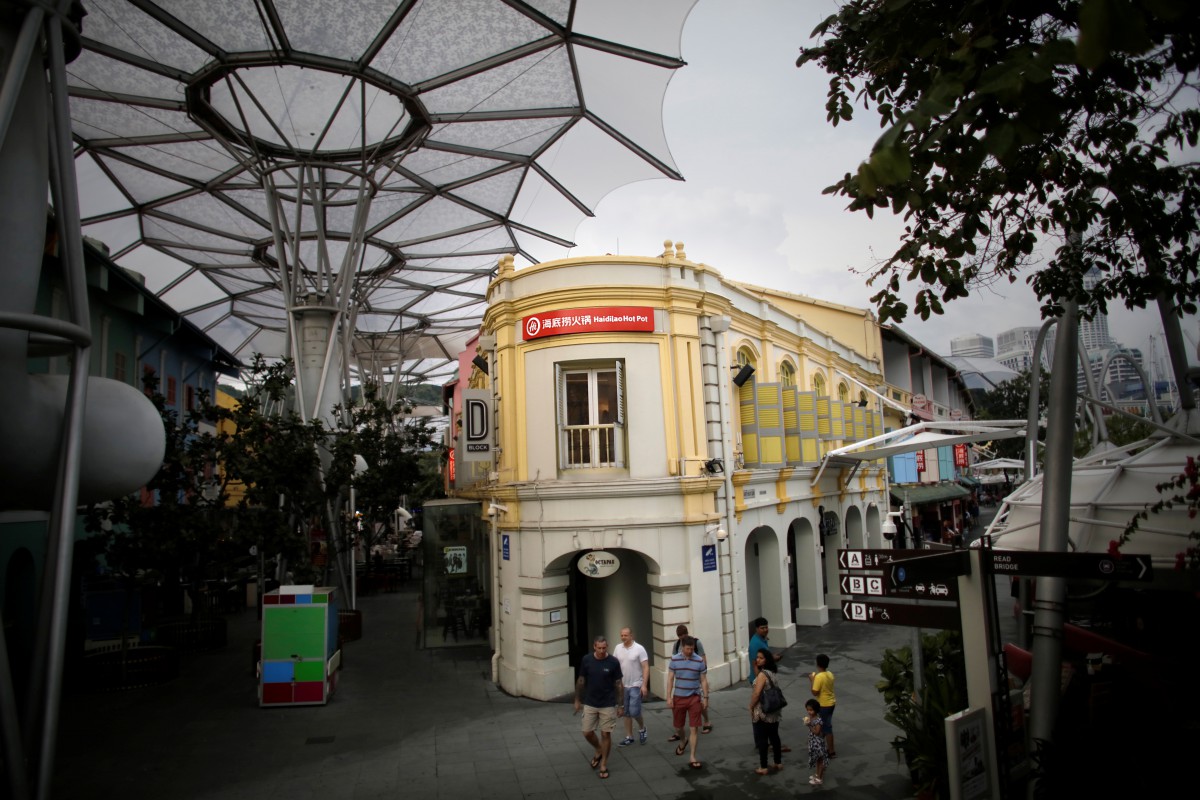
Singapore announced recently that it is planning to turn on facial recognition technology for over 100,000 lampposts to help authorities pick out and recognise faces in crowds across the city-state.

Dubbed “Lamppost-as-a-Platform,” the project is part of Singapore’s “Smart Nation” plan to use cutting-edge technology to improve people’s lives. “The government said the system would allow it to ‘perform crowd analytics’ and support anti-terror operations,” Reuters wrote.
2018-04-16T030334Z_2064132381_RC127EEA1010_RTRMADP_3_SINGAPORE-HAIDILAO

Singapore is planning to turn on facial recognition technology for over 100,000 lampposts. Source: Reuters

This, of course, raised privacy fears among security experts and rights groups, as well as Singaporeans. “At which point will it be deemed intrusive and unethical?” questioned 35-year-old Singaporean Danny Gan on Facebook.

The pilot project scheduled to begin next year.

SEE ALSO: How prepared is Singapore amid Southeast Asia’s raised terror threat?

Malaysia

In February 2018, Malaysian low-cost airline AirAsia rolled out the Fast Airport Clearance Experience System (Faces), which utilises facial recognition technology to allow passengers to board their flights faster.

AirAsia claimed Faces has an 80 percent identification success rate and will reduce the boarding process to between nine and 10 minutes, from 11 to 13 minutes on an average procedure.

The new feature was unveiled at Senai International Airport in Johor Bahru, Malaysia, the first Malaysian airport to use a facial recognition system. At that time, there were debates about how the data will be handled, as the system was launched amidst reports about data breaches in the country.

Moreover, since the system is still in its infancy stage in Malaysia, first-time and non-frequent foreign visitors to Senai International Airport could have some reservations about having their personal information stored.

China

Not to be outdone, China later announced that over 60 of its airports had been equipped with facial recognition technology. Cameras at 557 security channels capture images of faces and scan their passports or ID cards to verify their identity.

And it’s not just Chinese airports that are speeding ahead with usage of the technology.

“For instance, in multiple Chinese cities, facial recognition is being used by traffic management authorities to catch and publicly shame jaywalkers. In China’s Wuhan railway station, 32 facial recognition devices have been installed to speed up the process of checking tickets,” wrote Tech Wire Asia.
2018-04-13T072208Z_1041806262_RC115935B720_RTRMADP_3_SINGAPORE-SURVEILLANCE

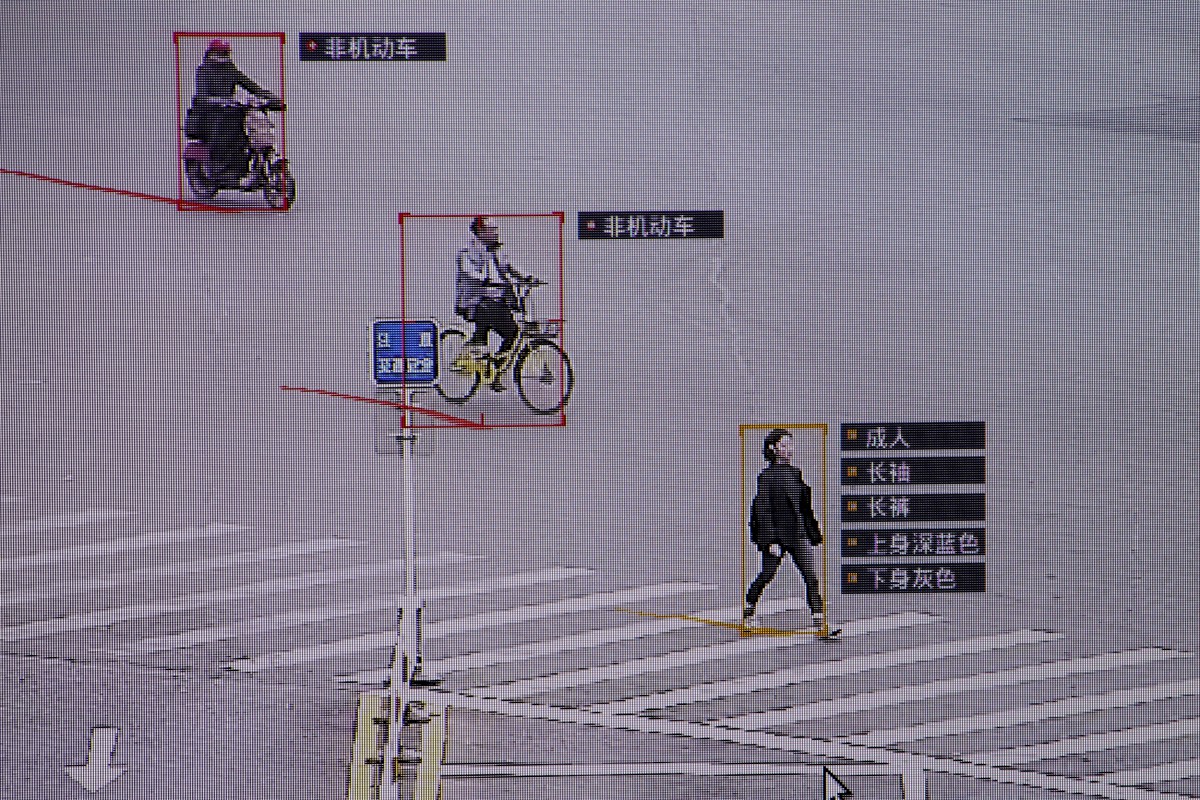
SenseTime surveillance software identifying details about people and vehicles runs as a demonstration at the company’s office in Beijing, China, October 11, 2017. Source: Reuters/Thomas Peter

SEE ALSO: Chinese police now using sunglasses with facial recognition

“And at Beijing Normal University, they have installed a facial recognition security system in the campus dorms, identifying students before allowing them access.” It sounds like creepy, Big Brother-style mass surveillance, but it has its strengths.

For example, on April 7, 2018, Chinese police arrested a 31-year-old fugitive in southeast China after facial recognition technology helped identify him in a crowd of about 60,000 people at Cantopop star Jacky Cheung’s concert.

China has even rolled out facial recognition technology for its public toilets, as part of a nationwide campaign to improve the quality of public conveniences. According to Rednet.cn, each person scanning their face will receive 40cm of toilet paper from a dispenser.

A version of this story was originally published on our sister website Travel Wire Asia.

Source link

Rescued giant turtles, endangered tortoises sent home to Malaysia

0

SINGAPORE: Four giant Asian turtles and two elongated tortoises, an endangered species, were repatriated to their home country Malaysia on Monday (Apr 16).

It is part of efforts by Singapore’s Animal Concerns Research and Education Society (ACRES) to rehabilitate animals which have been rescued from the illegal wildlife trade. 

Last February, the animal welfare group repatriated its first live reptile, an endangered Malaysian giant turtle named Rahayu, to Malaysia.

“Since then, we promised ourselves to do everything we could to give a second chance for Rahayu’s friends still residing in our sanctuary,” ACRES wrote in a Facebook post.

“It took us another whole year, but today we are finally sending Boltz, Andrea, Audrey, Ayu, Comot and Comel home to Malaysia!”

Of the six reptiles, the story of Boltz the Giant Asian Pond turtle has been most widely shared by ACRES. He was rescued in 2011 after a member of the public saw him being run over by a lorry. The accident left him with severe injuries, including a crack on his shell that looked like a lightning bolt, hence his name.

“I still remember the first night he came, he was all bleeding, he had massive bleeding, his shell was completely fractured, and we didn’t think he will make it. So many other turtles we have rescued with a similar fate didn’t make it,” said ACRES deputy chief executive Kalai Vanan, adding the Boltz’ resilience helped it on the road to recovery.

bolt giant turtle

Boltz the Giant Asian Pond turtle was rescued in 2011. (Photo: ACRES/Facebook)

Then there was Comot the elongated tortoise which was found two years ago walking along the road near the nature reserve at Seraya Crescent, and Audrey who was found in 2011 wandering around a bus stop.

The repatriation of the reptiles was documented on social media through a series of live videos and updates. 

At about 4.30pm, ACRES posted that the animals had left Singapore, and at 9pm, it said that they had passed the borders and were in the clear to proceed. 

Mr Kalai said the repatriation was very important not just for animals: “It is also a message to everyone out there that many of these animals which are smuggled in – they do deserve a second chance at life.”

“In the wild there will be no enclosure to confine them, they will be able to roam free and wild … Being endangered and vulnerable as they are, they can now meet other animals of the same species and reproduce,” he added.

Home Affairs and Law Minister K Shanmugam, who attended the repatriation event, highlighted the importance of raising awareness on the illegal wildlife trade. 

“Wildlife trade is not going to be stopped simply by us saying it should be stopped, or having legislation,” the minister said. “I think it can only come about through education. Human beings are innately good people.” 

“We look at the story of Boltz and the other turtles here, it’s really heart-rending. People look at them – they are small and cute, (they) take them as pets – (it) shouldn’t be done.” 

Source link

StoryFest 2018: International Storytelling Festival Singapore

0

StoryFest 2018: International Storytelling Festival Singapore
from Friday, June 1, 2018 at 12:00 AM to Monday, June 4, 2018 at 12:00 AM

The Arts House

Singapore, 179429 Singapore

Source link

20 public buses in Singapore to trial blind-spot warning system

0

SINGAPORE: Twenty public buses in Singapore now have a blind-spot warning system as part of a six-month trial, the Land Transport Authority (LTA) said during a demonstration of the feature on Monday (Apr 16).

The smart vehicle warning system, developed by Singapore Technologies (ST) Kinetics, alerts public bus drivers of vehicles, cyclists and pedestrians approaching their blind spots while on the road.

From Monday, 20 buses from all four of Singapore’s public bus operators – Go-Ahead Singapore, SBS Transit, SMRT Corporation and Tower Transit Singapore – are trialling the feature. Ten of the vehicles are double-decker buses, while 10 are single-decked.

The system, which is known as the Integrated Smart Advanced Warning Unit (I-SAW-U), consists of four cameras and six sensors installed at the front, rear and on top of the buses. 

blind spot bus warrning system 3

The sensor and camera (in white) at the rear of the bus give the driver a wider field of vision. (Photo: Amir Yusof) 

When the sensors detect a vehicle, cyclist or pedestrian coming close to the vehicle, a screen at the bus driver’s cockpit will sound an alarm and display a visual signal.

The alert has two levels – amber and red. An amber alert means the obstacle is 1m away from the bus, while a red alert means when the obstacle is only between 0.5m and 0.8m away from the bus.

Mr Lewis Tan, principal engineer for ST Kinetics, said that the system allows the driver to slow down the vehicle and stop in time to prevent any collision.

blind spot bus warrning system 5

Drivers will be notified by an audio alert and a visual display will indicate where the threats are. (Photo: Amir Yusof) 

“We want to give them better situational awareness around the vehicle. With that, we will help to enhance the safety of the drivers and commuters,” he said.

Mr Tan noted that the system is not meant to add to the task-loading of bus drivers.

“This system, especially through the audio alerts, allows him to pre-empt the possible obstacles he will come across. Then … he can do a quick check on what is on the screen and this will help him determine where the threats are coming from.”

blind spot warning system

The display on the screen informs the driver that there is an obstacle in front and on the right side of the bus. An audio alert will also sound. (Photo: Amir Yusof) 

Mr Tan said that at least 40 bus drivers from the four public bus operators have been trained to use the system.

Mr Azman Tumin, a driver with Go-Ahead Singapore, said that while it took him some time to learn how to use the system, he felt that it was “not difficult” to apply it. He has since used it to drive on two occasions.

“It’s straightforward to use the equipment and it will help us to ensure the safety of our driving. It reminds us of some hazardous obstacles we can encounter,” he said.

blind spot bus warrning system 2

The system can detect cyclists near the front and side of the bus. (Photo: Amir Yusof) 

Mr Tan highlighted that his team is still working to better use the I-SAW-U alert system.

“In this phase of the project, we are still gathering feedback and data to improve the system, so it’s a continuous job to improve it,” he said.

This proof-of-concept trial of the warning system is funded by LTA and ST Kinetics. LTA said it will review the results from the trial before deciding on the next course of action.

The authority added that it will continue improving the technology for the safety of drivers and commuters. 

Source link

SMU, A*STAR, Fujitsu developing predictive tech to prevent ship collisions

0

One of the technologies they are working on include the ability to detect and recognise a near-miss risk 10 minutes before the incident happens.

US Navy ship John McCain collision

The guided-missile destroyer USS John S McCain is guided by a tugboat (L) after a collision with an oil tanker, outside Changi naval base in Singapore on August 21, 2017. (Photo: AFP/Roslan Rahman)

SINGAPORE: The Straits of Singapore and Malacca is one of the world’s busiest sea lanes, and has seen some high-profile incidents recently such as US Navy ship John S McCain colliding with an oil tanker resulting in the deaths of 10 US sailors last August. 

This backdrop makes the work of the Agency for Science, Technology and Research’s (A*STAR) Institute of High Performance Computing, Singapore Management University (SMU) and Fujitsu all the more relevant, as they look to develop new predictive technologies for maritime vessel traffic management – with the support of the Maritime and Port Authority of Singapore (MPA).

In a joint press release on Monday (Apr 16), they said these predictive technologies will tap the power of artificial intelligence and big data analytics.

One of the technologies being developed is a short-term trajectory prediction model to accurately predict the trajectory of a vessel using machine learning and motion physics. Similarly, a long-term traffic model is also being developed to forecast the traffic situation based on the patterns of a large number of vessel types derived from historical data, they added. 

Another technology being developed is risk calculation model that can reliably quantify the near-miss risk of a pair of vessels by integrating various risk models, among other works.

These will then be integrated and tested for their potential to enhance navigational safety, such as the ability to detect and recognise a near-miss risk 10 minutes before the incident even happens, the press release noted. 

“As a globally critical point of passage for seaborne commercial shipping traffic, the continuous enhancement of navigational safety in these crowded waters is a crucial goal,” according to the press release. 

The research and development (R&D) was initiated by the Urban Computing and Engineering Centre of Excellence, a public-private partnership between A*STAR, SMU and Fujitsu, which was set up in 2014.

Additionally, the MPA said in the release it supports the development of technologies that harness AI to enhance navigational safety within the Port of Singapore, and will provide data and information for further R&D and testing of these technologies. 

This is in line with the Maritime Transformation Programme unveiled during this year’s Budget debates, with strategic sea space and maritime traffic management as one of the stated focus areas. 

Source link