SINGAPORE: Police on Monday (Jun 11) said they arrested 91 people for various offences during a six-day multi-agency joint operation in Geylang.
The joint operation, which ended in the evening of Jun 8, was led by the Bedok Police Division and involved officers from the Criminal Investigation Department (CID), Central Narcotics Bureau (CNB), Health Sciences Authority (HSA), Immigration & Checkpoints Authority (ICA), Ministry of Manpower (MOM), and Singapore Customs.
Cough mixtures and illegal tablets seized during the multi-agency enforcement operation. (Photo: Singapore Police Force)
Contraband cigarettes, cough mixtures and illegal tablets were seized during the operation. The total street value of the seized items amounted to around S$4,500.
Six men, aged between 42 and 58, were arrested for suspected drug-related offences while two men, aged 31 and 32, were arrested for peddling and possession of duty-unpaid cigarettes.
Items seized during the multi-agency enforcement operation. (Photo: Singapore Police Force)
Fourteen women, aged between 19 and 45, were arrested for offences under the Women’s Charter.
During one of the inspections, a residential unit housing foreign workers was found to be overcrowded. A 28-year-old man was also arrested for an immigration offence.
Sixty-seven people were arrested for various offences which included promoting public gaming, gaming in public, and being a member of an unlawful society. (Photo: Singapore Police Force)
Another 67 men and one woman, aged between 16 and 78, were arrested for various offences which included promoting public gaming, gaming in public, and being a member of an unlawful society.
SINGAPORE: Prime Minister Lee Hsien Loong and United States President Donald Trump held a bilateral meeting on Monday (Jun 11), just one day before Mr Trump and North Korean leader Kim Jong Un are due to meet for a planned summit on Sentosa island.
Mr Trump was received by Mr Lee at the Istana, and was accompanied by secretary of state Mike Pompeo, national security adviser John Bolton, White House press secretary Sarah Huckabee Sanders and White House chief of staff John Kelly.
Mr Lee also hosted a working lunch for Mr Trump and his delegation. At the lunch, Mr Trump expressed optimism for Tuesday’s meeting with Mr Kim and also thanked his Singapore hosts for their hospitality.
“We have a very interesting meeting in particular tomorrow, and I think things can work out very nicely,” he said. “But we appreciate your hospitality and professionalism and your friendship.”
In a photo shared by Education Minister Ong Ye Kung on social media, the lunch menu appeared to include lobster bisque, angus beef tenderloin and chendol ice-cream.
US President Donald Trump at a working lunch hosted by Singapore PM Lee Hsien Loong at the Istana on Monday (Jun 11), ahead of Trump-Kim summit on Jun 12. (Photo: Facebook/Ong Ye Kung)
Mr Trump’s motorcade left the Shangri-La Hotel, where he is staying, shortly before noon to make the short journey to the Istana. Crowds of curious onlookers lined the convoy’s route, taking photographs and waving.
Mr Trump also waved to the crowds who lined the streets.
Earlier on Monday morning, Mr Trump tweeted saying it was “great to be in Singapore, excitement is in the air”.
Mr Trump, who arrived in Singapore on Sunday evening, was due to meet with US embassy officials later on Monday afternoon.
Mr Trump had cut short his time at the G7 summit in Canada to come to Singapore for the Tuesday meeting with Mr Kim, which will be held at Sentosa’s Capella hotel.
The unprecedented meeting, which is the first time a sitting US president meets a North Korean leader, could see North Korea dismantle its nuclear arsenal in return for economic help and security guarantees.
Mr Lee also held a separate meeting at the Istana with Mr Kim on Sunday. During the meeting, Mr Lee and Mr Kim discussed Singapore-North Korea relations, as well as developments in the North and the region.
SINGAPORE: About S$180 million in Medisave top-ups will be disbursed to eligible seniors this year, as part of the Pioneer Generation Package, the Ministry of Finance (MOF) announced on Monday (Jun 11).
In a press release, MOF said pioneers will receive letters in the coming week, informing them of their top-ups, which will be credited in July.
Eligible pioneers will receive between S$200 and S$800, depending on the year of their birth.
This will be the fifth year pioneers are receiving MediSave top-ups, since the launch of the Pioneer Generation Package in 2014.
The Pioneer Generation MediSave top-ups are in addition to the MediSave top-ups for Singaporeans aged 65 and above in 2018, under the GST Voucher Scheme. Both of these are permanent schemes, disbursed yearly in July and August, respectively.
(Table: Ministry of Finance)
For example, a pioneer who is 85 this year, lives in an HDB flat and does not own a second property, will receive a total of S$1,250 in MediSave top-ups this year – S$800 from the Pioneer Generation MediSave top-up and S$450 from the GST Voucher Scheme.
Meanwhile, a pioneer who is 69 this year, and in similar circumstances as the first example, will receive a total of S$450 in MediSave top-ups this year – S$200 from the Pioneer Generation MediSave top-up and S$250 from the GST Voucher Scheme.
Pioneers may use these MediSave top-ups to pay for their MediShield Life premiums and other MediSave-approved insurance plans, hospitalisation, day surgery, and approved outpatient treatments.
The Pioneer Generation Package was launched in 2014 to honour the “special cohort” who helped make “Singapore what it is today”. Those eligible have to be aged 16 years and above in 1965, and must have obtained their Singapore citizenship on or before Dec 31, 1986.
SINGAPORE: A wavering possibility, rekindled by unexpected overtures, finally looks set for fruition.
The highly anticipated tête-à-tête between Donald Trump and Kim Jong Un on Tuesday (Jun 12) is on the brink of reality.
For the first time, a sitting US President and a North Korean leader, representing two countries which have never seen eye to eye, will meet face to face, and the island nation of Singapore will host this historic event.
Just weeks ago, when Kim and his South Korean counterpart Moon Jae-in took a stroll in the border village of Panmunjom, the sun shined again over the peninsula as the neighbours engaged like old friends.
The world watched.
When state leaders convene, even simple gestures – be it a hesitant handshake or an exuberant embrace – are scrutinised from every angle.
Every uttered word is recorded as analysts and journalists dissect the discourse in the days and weeks that follow. And of course, the dining that goes with the diplomacy becomes the subject of media interest too.
Kim Jong Un reached out to South Korean President Moon Jae-in in time for the Winter Olympics and they held a historic summit in April 2018. (Photo: AFP/Korea Summit Press Pool)
In summary, summits are significant. And the one Singapore is prepared to host ranks among the biggest that have altered the course of history.
Even the recent Korean summit had a precedent just 18 years ago. But one between a US and North Korean leader has always remained an unlikely prospect since the Americans left the unfinished Korean War.
More than half a century of pent-up anger, sanctions, sabre-rattling and diatribes between 11 US administrations and three successive North Korean leaders, have stalled nuclear disarmament talks and exacerbated tensions across the globe.
This precarious backdrop sets the scene for this once unimaginable summit. And it’s precisely why there is a desperate optimism in some quarters for a watershed moment, even as questions remain as to whether hot button issues like the Korean War and denuclearisation will be addressed.
Writing for The National Interest, Robert E Kelly, associate professor of international relations at Pusan National University, described the summit as “one of America’s strangest meeting” where he expected very little and yet hoped for the best.
“Indeed at this point, it looks to be a nothing burger of photos and short, ‘get to know you’ meetings that yield nothing. But, again, if this meeting must happen, then let America should (sic) pull for Trump given just how important the stakes. Prove your critics wrong, Mr President,” he said.
TURNING POINTS
While meetings between leaders are regular features of international relations, few can be perceived as significant turning points in human history.
Hark back to the height of the Cold War, and you come across one of the most unexpected summits to have taken place in the last hundred years – the meeting between US President Richard Nixon and his Chinese counterpart Mao Zedong in Beijing.
The historic handshake between Chinese leader Mao Zedong and Richard Nixon in 1972. (Photo: AFP)
The balance of world power underwent a tectonic shift, as the leaders from opposite sides of the political spectrum shook hands and shocked the world in February 1972.
US rapprochement with the Chinese dealt the Soviets a rude awakening in their quest for dominance in the bipolar conflict. While there were other factors that led to the eventual Soviet downfall, Nixon’s visit to China arguably precipitated the beginning of the end of the Cold War, opened China to the rest of the world and helped in the normalisation of its relations with its adversary, Japan.
“For East Asia, the last most important summit was probably the Nixon-Mao summit that changed the course of the Cold War,” associate professor Bhubhindar Singh, a Northeast Asia expert from the S Rajaratnam School of International Studies, told Channel NewsAsia.
The world would head in a different direction from that moment.
Not long after that momentous occasion, still within the theatre of the Cold War, another memorable summit drew global attention.
The famous Geneva fireside chat between US President Ronald Reagan and Soviet leader Mikhail Gorbachev in November 1985 was another significant step towards ending the bitter conflict and the beginning of a temporary period of détente between the world powers.
This meeting set the wheels in motion for subsequent summits between the two leaders, eventually paving the way for the end of the Cold War.
Recent history has also recorded such unlikely get-togethers.
Following decades of Cold War tensions, Barack Obama and Raul Castro, pictured in 2016, in announced a warming of relations in December 2014 AFP/STR
The meeting between former US President Barack Obama and Cuban leader Raul Castro just three years ago, was the first between an American and Cuban leader in half a century that quickly unlocked the doors to diplomatic ties.
Later in the same year, the world turned its attention to Asia, and specifically Singapore.
Shattering nearly seven-decades of tension, Chinese President Xi Jinping and Taiwanese leader Ma Ying-jeou shook hands for almost a minute. Shifting in synchronised fashion from right to left for every camera flash to capture the historic moment, their smiles sustained throughout the handshake as a signal of solidarity.
A watershed moment in cross-strait relations, said Chinese media, although hindsight might suggest otherwise. It was historic based on its symbolism, but not the impact it had on the future.
The Xi-Ma summit in 2015 was the first time leaders from Beijing and Taipei met since Taiwan split from the mainland in 1949. (Photo: AFP/ROSLAN RAHMAN)
That meeting, though, put Singapore under the global spotlight as host, bringing it valuable experience in the delicate task of accommodating leaders amid political sensitivities and security concerns that could have global ramifications.
What the island nation is about to handle over the next few days is, however, a different ball game altogether, not just because of the potential for a turning point of global magnitude.
Putting the historical element aside, the Trump-Kim summit draws undue attention simply because of the leaders themselves.
The protracted antagonism between Washington and Pyongyang is well-documented and has consistently manifested itself in the exchanges and statements under various administrations and leaders.
But the language has never been more colourful and undiplomatic – “little rocketman”, “dotard” and “short and fat” come to mind – even as US allies, Japan and South Korea observed the tit for tat with bated breath.
However, the tense state of affairs was suddenly assuaged, partly by an inexplicable exchange of cordial letters over the course of a week. Suddenly, the interaction took a more measured tone – perhaps even presidential as some have observed.
For now, it seems all is well and good.
HOSTS OF HISTORY
Preparations have been underway at frenetic pace with officials from both sides conducting high-level meetings and communicating directly with their Singaporean hosts.
US Secretary of State Mike Pompeo and Secretary of Defence Jim Mattis were crystal clear in their appreciation of Singapore’s efforts in hosting the summit when they met their counterparts.
US Defense Secretary James Mattis and Singapore Defence Minister Ng Eng Hen meeting on the sidelines of the 16th Shangri-La Dialogue in Singapore. (Photo: MINDEF)
Singapore’s Defence Minister Ng Eng Hen said many officials have commented that without Singapore, preparations for the summit “would not have progressed so far”. It’s a testament to the country’s increasingly critical role in global politics.
Singapore’s Minister for Foreign Affairs Vivian Balakrishnan was succinct in describing the hosts sentiment during a working trip to Washington earlier in the week.
“Happy to play (its) part for world peace,” he said, as he met US Secretary of State Mike Pompeo and National Security Advisor John Bolton.
“The fact that we have been chosen as the site of the meeting, we did not ask for it … it says something about Singapore relations with the parties … and our standing in the international community,” he said.
When historic events take place, the cities that host them are entered into history as well.
The most famous capitals and even the most obscure towns become synonymous with epoch-making moments.
The Versailles Treaty that ended World War I, the Potsdam conference of World War II, the Bretton Woods Agreement that laid the foundation for the global economic system, and just two years ago, the historic Paris Climate Agreement – all among examples of significant turning points, named and remembered after their hosts.
Visitors at the gardens of the Versailles Palace outside Paris on Tuesday AFP/FRANCOIS GUILLOT
Singapore’s place among them should not be determined by the outcome of this summit, one could argue, as questions remain as to whether the meeting between Trump and Kim will be a watershed moment.
“For Kim, this meeting is important for several reasons: To gain legitimacy for himself and his country. This meeting is also important for North Korea as it is in negotiation talks with the most important threat to its regime and national security,” associate professor Bhubhindar Singh said.
“For Trump, this meeting is to show his ability to ‘resolve’ the most difficult issue that other American administrations have failed to achieve. In more strategic terms, a deal here would reinforce America’s advantage and military presence in Northeast Asia vis-à-vis China.”
Some believe this could be just the start of a long drawn out process, especially in the sphere of denuclearisation.
“Kim is focused on the long game. If talks go forward after June, their differences over denuclearising Korea obviously won’t be resolved in a day,” wrote Kent Harrington, a former CIA senior analyst, in a commentary.
Will the summit mirror the impact of the Nixon-Mao meeting? Or will it begin a process of détente as did the famous fireside chat? Will it quickly open doors to diplomatic ties? Or simply be written as an inconsequential historic event, as was the Xi-Ma meeting?
All we know for now is that the magnitude of what’s at stake cannot be overstated: The demands for North Korea’s denuclearisation, the possibility of ending the Korean War and normalising relations on the Korean Peninsula, and the impact of all this on the region and the rest of the world.
The scheduled meeting between two eccentric world leaders, with the baggage of the past and present in tow, will draw all the attention from across the globe. Journalists and officials have already descended on the island in the thousands, casting a blinding spotlight on this tiny Southeast Asian country.
According to associate professor Bhubhindar Singh: “The selection of Singapore says a lot of who Singapore is – an efficient, honest, neutral country that can be trusted to hold such an important summit.”
Singapore – known for its efficiency, infrastructure and organisational competency – has to pull out all the stops for this one. It’s a mammoth task to be executed within a tight schedule.
The world awaits the Singapore Summit on Jun 12, 2018.
Watch our comprehensive coverage of the Trump-Kim summit live on YouTube from 7am on Tuesday (Jun 12). Subscribe to our channel here.
SINGAPORE: Hosting the Trump-Kim summit will give Singapore publicity and says something about the country’s standing in the international community, Prime Minister Lee Hsien Loong said on Sunday (Jun 10).
Speaking to Singapore media at the International Media Centre ahead of the planned Trump-Kim summit on Tuesday, Mr Lee said: “In terms of direct impact, (hosting the summit) gives us publicity.
“The fact that we have been chosen as the site of the meeting, we did not ask for it … it says something about Singapore relations with the parties … and our standing in the international community,” he added.
PM Lee added that from Singapore’s point of view, it is important that the meeting takes place and has a positive outcome– one that sets developments “on a new trajectory, and will be conducive to the stability and security in the region”.
However, Mr Lee warned that the tense situation in the Korean peninsular has been ongoing for up to 70 years, and one “cannot wipe that all away in one meeting”.
“What you can hope to do is start things moving in a positive direction and hope to build up progressively along the way … I think that’s a long process but this is a first step which happens in Singapore and well, we are happy to be associated with it,” he said.
Mr Lee added: “When the two sides asked us to host the meeting, we couldn’t say no. We have to step up and we can. We are capable of doing it, we have put some resources into it, but we can do a good job.”
Mr Lee confirmed that Singapore will spend about S$20 million on the summit, with security costing half the figure. On the amount spent, Mr Lee said: “We are willing to pay and it’s our contribution to an international endeavour which is in our profound interest.”
When asked by a journalist how Singapore was going to recoup the amount, Mr Lee said: “I think if you calculate the price of everything in this world, you will miss out on the really important things.
“And in this case what is important is that the summit is held and we are hosting it – not extravagantly – but … making sure the operation requirements are met. We will be sure to be cost conscious, and we will also be sure that we will do what is necessary to make this a safe meeting,” he said.
OFFICERS HAVE DONE A GOOD JOB PREPARING: PM LEE
Earlier on Sunday morning, Mr Lee visited the Singapore Armed Forces operations deployment in Sentosa and the Home Team Command.
Prime Minister Lee Hsien Loong speaking with officers at the Home Team command post for the summit meeting between US President Donald Trump and North Korean leader Kim Jong Un. (Photo: Gaya Chandramohan)
Mr Lee reserved special praise for how the different government agencies have prepared for this “major operation”.
Mr Lee added: “They’ve (SAF, police, Ministry of Communications and Information) done a good job … being able to put it all together and to integrate and coordinate. And they’re all ready for operations for the next few days.”
Mr Lee will have separate meetings with North Korean leader Kim Jong Un and US President Donald Trump. Mr Lee will meet Mr Kim on Jun 10 and Mr Trump on Jun 11.
Watch our comprehensive coverage of the Trump-Kim summit live on YouTube from 7am on Tuesday (Jun 12). Subscribe to our channel here.
SINGAPORE: North Korean leader Kim Jong Un met Singapore Prime Minister Lee Hsien Loong at the Istana on Sunday (Jun 10), two days before a planned summit with United States President Donald Trump.
“The entire world is focusing on the historic summit between the DPRK and the US, and thanks to your sincere efforts … we were able to complete the preparations for the historic summit, and I would like to thank you for that,” Mr Kim, speaking through an interpreter, told PM Lee.
“I have the expectation that this (summit) will be very successful.”
The meeting took place less than four hours after Mr Kim touched down at the Changi Airport, where he was received by Foreign Affairs Minister Vivian Balakrishnan and Education Minister Ong Ye Kung.
Mr Kim’s motorcade left Changi Aiport accompanied by traffic police escorts as it headed for the St Regis Hotel, where he is expected to stay.
Kim Jong Un landed in Singapore on Sunday afternoon (Jun 10).
Mr Trump is staying at the Shangri-La Hotel, which is also in the Tanglin area within Singapore’s city centre.
The two leaders are to meet on Tuesday at the Capella Hotel on Sentosa island where talks on denuclearisation of North Korea in exchange for economic help will be on the table.
Both Sentosa and the Tanglin area have been designated special event areas by the police and security has been tightened at both places.
Last week, Singapore authorities also warned travellers arriving at and departing from Singapore to expect flight delays as airspace will be restricted from Sunday to Thursday.
More than 2,500 journalists have descended on Singapore to cover the event, and will be based at a media centre at the F1 pit building.
The unprecedented meeting, the first time a sitting US president meets a North Korean leader, was nearly called off just two weeks before the event.
SINGAPORE: North Korean leader Kim Jong Un touched down in Singapore on Sunday (Jun 10), two days before a planned summit with US President Donald Trump.
The two leaders are to meet Tuesday at the Capella Hotel on Sentosa island where talks on denuclearisation of North Korea in exchange for economic help will be on the table.
Mr Kim’s motorcade left Changi Aiport accompanied by traffic police escorts.
Kim Jong Un landed in Singapore on Sunday afternoon (Jun 10).
The North Korean leader is expected to stay at the St Regis hotel and Mr Trump at the Shangri-La, both in the Tanglin area within Singapore’s city centre.
Both Sentosa and the Tanglin area have been designated special event areas by the police and security has been tightened at both places.
Last week, Singapore authorities also warned travellers arriving at and departing from Singapore to expect flight delays as airspace will be restricted from Sunday to Thursday.
More than 2,500 journalists have descended on Singapore to cover the event, and will be based at a media centre at the F1 pit building.
The unprecedented meeting, the first time a sitting US president meets a North Korean leader, was nearly called off just two weeks before the event.
Ahead of his departure for Singapore, President Trump described the meeting as a “mission of peace”, for which they had a “one-time shot”. “I think within the first minute I’ll know … And if I think it won’t happen – I’m not going to waste my time. I don’t want to waste his time,” he told the media at G7 summit in Quebec, Canada.
SINGAPORE: Hosting the Trump-Kim summit will give Singapore publicity and says something about the country’s standing in the international community, Prime Minister Lee Hsien Loong said on Sunday (Jun 10).
Speaking to Singapore media at the International Media Centre ahead of the planned Trump-Kim summit on Tuesday, Mr Lee said: “In terms of direct impact, (hosting the summit) gives us publicity.
“The fact that we have been chosen as the site of the meeting, we did not ask for it … it says something about Singapore relations with the parties … and our standing in the international community,” he added.
PM Lee added that from Singapore’s point of view, it is important that the meeting takes place and has a positive outcome– one that sets developments “on a new trajectory, and will be conducive to the stability and security in the region”.
“When the two sides asked us to host the meeting, we couldn’t say no. We have to step up and we can. We are capable of doing it, we have put some resources into it, but we can do a good job,” he said.
Mr Lee confirmed that Singapore will spend about S$20 million on the summit. On the amount spent, Mr Lee said: “We are willing to pay and its our contribution to an international endeavour which is in our profound interest.”
Earlier on Sunday morning, Mr Lee visited the Singapore Armed Forces operations deployment in Sentosa and the Home Team Command at the Police headquarters.
Prime Minister Lee Hsien Loong speaking with officers at the Home Team command post for the summit meeting between US President Donald Trump and North Korean leader Kim Jong Un. (Photo: Gaya Chandramohan)
On the preparations so far, Mr Lee said: “They’ve (SAF, police, MCI) done a good job, not just their own pieces but being able to put in all together and to integrate and coordinate. And they’re all ready for operations for the next few days.
Mr Lee will have separate meetings with North Korean leader Kim Jong Un and US President Donald Trump. Mr Lee will meet Mr Kim on Jun 10 and Mr Trump on Jun 11.
SINGAPORE: If you think brain drain is a problem that afflicts only developing or less developed countries, think again.
The phenomenon, which refers to the large-scale emigration of educated and high-skilled individuals from their birth country, also exists in OECD countries such as Spain, Ireland and Italy.
Neither are Hong Kong, Taiwan, and Singapore – prosperous economies with a GDP per capita of US$46,228, US$24,337 and US$57,722 respectively in 2017 – immune from brain drain.
In particular, a high percentage of youths in these economies plan to seek greener pastures overseas, albeit for varying reasons.
A 2016 survey conducted by the Chinese University of Hong Kong (CUHK) found that 57 per cent of young Hong Kong people aged 18 to 30 had the intention to emigrate, while another survey in Taiwan revealed that 62 per cent of Taiwanese between the age of 20 to 35 planned to seek employment abroad.
Here at home, 42 per cent of young Singaporeans polled by the Institute of Policy Studies (IPS) in 2010 said that emigration was often on their minds, and 26 per cent were also actively exploring avenues to emigrate.
What lies beneath the seeming disenchantment of youths in these Asian Tigers?
Is this a cause for alarm for the governments of Hong Kong, Taiwan and Singapore?
PUSH AND PULL FACTORS
The IPS Survey of young Singaporeans showed that alongside social norms such as the positive perception of overseas relocation and the social status of overseas Singaporeans, a perceived lack of upward mobility in Singapore also fuelled the desire to emigrate.
89 per cent of respondents in the Taiwan survey cited low salaries as the key push factor for them to seek employment abroad. Fresh graduates in Taiwan are reportedly paid less than NT$30,000 (S$1,344) a month.
A lacklustre job market at home, in contrast to the dynamic career opportunities in China, have also driven educated Taiwanese to relocate up north.
The Taipei Metro system.
Among the roughly 700,000 Taiwanese working outside of Taiwan in 2015, about 60 per cent or 420,000 were in China.
Hong Kong’s notorious housing woes have propelled its young people to leave the overcrowded and land scarce city. However, harsh economic realities are not the sole reason for the disillusionment of young Hong Kong people.
According to the CUHK survey, Hong Kong’s political malaise has an equally big part to play. 11 per cent of those who intended to relocate said they were unhappy with the government; another 10.3 per cent cited Hong Kong’s political and social cleavages as a push factor.
While the youth in Hong Kong, Taiwan and Singapore may face similar economic livelihood challenges, the emerging sense of angst in Hong Kong is different as it also stems partially from the city’s socio-cultural outlook under Chinese rule, especially the whittling away of a distinctive Hong Kong identity and culture.
This dreary prospect of identity loss was presented by businessman and Chinese General Chamber of Commerce chairman Jonathan Choi, who recently said: “In the future, we will no longer be Hong Kong people, but Greater Bay Area people,” as he urged Hong Kongers to focus on integration with China under the Greater Bay Area plan.
In face of communist China’s strong pressure on the city to assimilate, therefore, Hong Kong’s youth are naturally anxious about the foreseeable fade-out of their identity and the paradox of living in their birthplace with a sense of rootlessness, or being strangers in their homeland.
The 2014 mass protests in Hong Kong were called the “Umbrella Movement” after pro-democracy activists using umbrellas to protect themselves from tear gas sprayed by police. (File photo: AFP/Alex Ogle)
For all its negative connotations, brain drain may not necessarily be damaging to the sending country, at least in the economic sense.
For one, the transnational movement of talents is not a one-way flow. This means the economic costs of brain drain may be compensated through government policy that encourages the inflow of high-skilled workers from other economies.
Moreover, local talents who have relocated overseas may also return, where their overseas experience is a boon.
The question is if the pull factors are compelling enough to lure these skilled workers back.
Taiwan, with its vibrant democratic culture, is a magnet for young and aspiring Hong Kong emigrants – it is the most preferred destination for 16.3 per cent of Hong Kong youths.
Taiwan’s challenge is to revitalise its flagging economy to create more attractive career opportunities for its youths.
Economics aside, governments would be short-sighted to ignore the socio-cultural and political consequences of persistent talent flight over the longer term, particularly its impact on nation-building.
Beijing clearly understands the implications and artfully plays the game to its advantage.
Earlier in April, it unveiled 31 measures to make benefits and opportunities across the strait more accessible for Taiwanese firms and individuals.
If the incentives successfully entice more Taiwanese to settle in China, Taiwan may become further divided as more people favour closer ties with Beijing.
The Xi-Ma summit in 2015 was the first time leaders from Beijing and Taipei met since Taiwan split from the mainland in 1949. (Photo: AFP/ROSLAN RAHMAN)
In Hong Kong, while a growing number of people are seeking to leave, 100 to 150 mainland Chinese stream into the city every day on One-Way Permits issued by mainland China.
This population movement will probably transform Hong Kong society over the long term, giving rise to a people more open to influence from Beijing.
Bolstering the Hong Kong identity to retain its young talent, however, is not an option for the Hong Kong administration, as it is likely to be construed by Beijing as a politically-incorrect move promoting “separatism”.
In Singapore, where the outflow and inflow of migrants have become a norm, the Government has increasingly recognised the importance of building a national identity.
On May 18, Minister in the Prime Minister’s Office Indranee Rajah said in Parliament that the Singapore identity is “particularly pertinent” in the evolving global landscape, which is witnessing China’s rise, America’s “introspection,” economic shifts brought on by technology and so forth.
She urged young Singaporeans “to help write the next chapter in the country’s history.”
Nation-building is an ongoing process. For young nations like Singapore, the continuing consolidation of a national identity which fosters a strong sense of rootedness, may hold the key to drawing their overseas talent back home someday.
Dr Yew Chiew Ping is head of the Contemporary China Studies Minor at the Singapore University of Social Sciences. Kwong Kin Ming is a researcher based in Hong Kong, and author of the book Comparing Singapore and Hong Kong: The Singapore Model and Hong Kong’s Future (in Chinese).
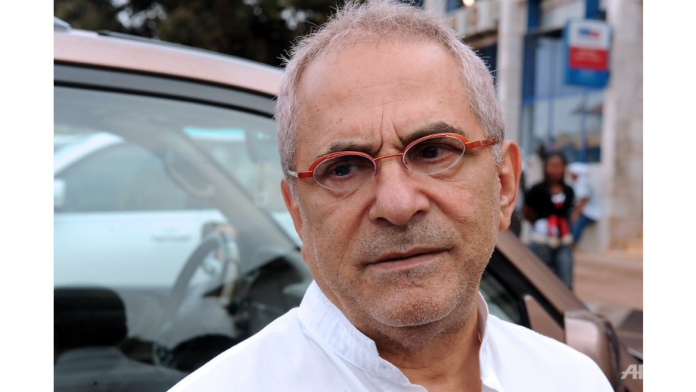
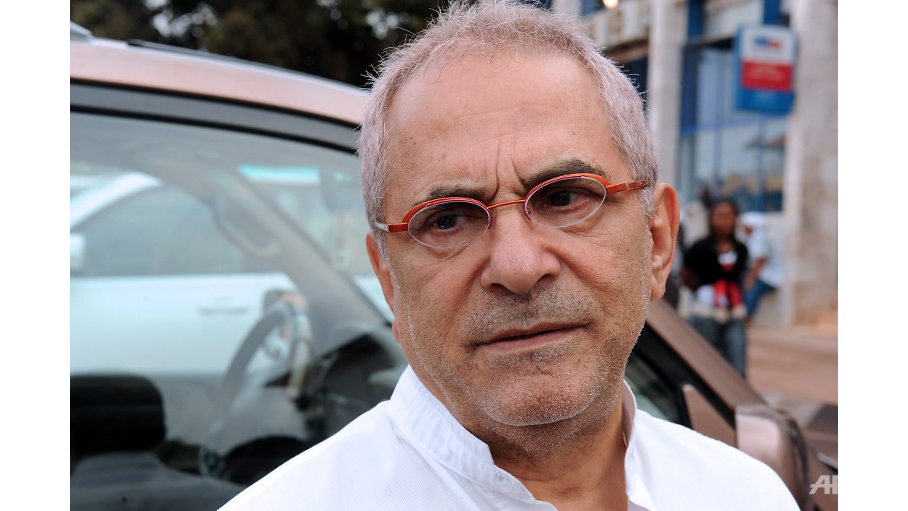
SINGAPORE: “I thought I was going to die. I lost four litres of blood, but my concern was whether the country would slide into a civil war,” says Jose Ramos-Horta as we talk about the attempt assassinate to him in 2008.
In Singapore for UNLEASH, a global innovation conference aimed at coming up with solutions to achieve United Nations (UN) Sustainable Development Goals, he made some time to recount the most powerful moments of his fight for the freedom of Timor-Leste and tell me how he feels about his country’s future.
The 69-year-old Nobel Peace Prize laureate who served as foreign minister (2002-2006), prime minister (2006-2007) and president (2007-2012) tells of the decades he spent fighting for his country’s freedom from Indonesian occupation in a largely calm and collected manner with moments of subtle emotion as he speaks about the most painful and agonising events in his journey.
Mr Ramos-Horta currently serves as an Adviser to the President of the UN General Assembly.
But memories of his past remain vivid in his mind.
His country, Timor-Leste, previously known as East Timor had attained freedom from Indonesian occupation in 1999, but as a young democracy, it had its share of factional strife.
The 2008 assassination attempt on Mr Ramos-Horta was perpetrated by a rebel soldier.
“A renegade army officer, very unstable, with a huge ego went to the mountains, deserted from the army with about 20 followers. I wouldn’t use force against them. I was engaging them mainly through dialogue. Strangely enough, on that morning, he and his men came to my house while I was out doing my early morning exercises. There was an exchange of fire and he was shot dead by one of my security guards. I came back to the house and was shot.
“The remaining renegade soldiers surrendered to me when I arrived back home after my recovery in hospital. They all surrendered with their weapons, but they were put on trial. After their trial, they were sent to prison, but I pardoned them.”
He was criticised for doing so. I ask him why he felt compelled to do it.
“Because these were soldiers, simple people. The turmoil had to do with the failure of their leader, not them. I wasn’t going to blame the small people.”
He had, after all, spent most of his life fighting for the rights of his people, who he describes as the “little people” having to go up against much more powerful entities.
His face might be weathered by years of diplomatic battle, but his eyes still bear the spark of the fiery freedom fighter who, for 24 years, lobbied the international community to restore justice and dignity to the people of Timor-Leste.
POVERTY AND NEGLECT
A former Portuguese colony, East Timor was invaded by Indonesia in December 1975 after the Portuguese left. Mr Ramos-Horta left his country just a few days before the invasion. As foreign minister in the Timorese nationalist leadership made up of pro-independence parties, he had been given a mission to plead the Timorese case before the UN.
For the next 24 years of Indonesian occupation, he was the East Timorese resistance’s exiled spokesman.
But he was no stranger to occupation, having grown up under the Portuguese, who had colonised East Timor four centuries previously.
His father was a Portuguese naval gunner who was himself exiled to the East Timor for a failed attempt to fight the dictatorship in Portugal.
Mr Ramos-Horta was educated in a remote Catholic mission. He did well enough to become one of the few East Timorese to be sent to high school in the capital Dili.
East Timor was largely a neglected trading post or the Portuguese. They hardly invested in infrastructure, health, and education.
“During my time as a child, what affected me most was seeing the poverty, neglect, lack of education. There were very few schools and no university. This is what impacted me most. I wanted the Timorese to access education and to get more opportunities in life.”
Where Portuguese rule was actively asserted, it was “brutal and exploitative”, he says.
Mr Ramos-Horta with other like-minded East Timorese yearned for freedom and when he made an indiscreet remark on the issue, he was exiled to Mozambique for three years.
He returned to East Timor in 1974 Ramos-Horta and founded the Social Democratic Association of Timor which then became the popular pro-independence party, the Revolutionary Front for an Independent East Timor (Fretilin).
Following a coup in 1974, the new government of Portugal began a gradual decolonisation process. As part of a token gesture it held an election in East Timor in 1975.
Fretilin garnered 55 per cent of the vote on election day but its power was challenged by a civil war believed to be initiated by a Jakarta-backed East Timorese political party, Apodeti.
Amid all this and as the Portuguese withdrew, rumblings of an invasion began in Indonesia. It was believed that Indonesia was fearful of having a leftist state at its doorstep and also wanted to lay claim to the oil reserves which had been newly discovered in East Timor’s territorial waters.
Even though East Timor declared independence in November 1975, it didn’t stop the Indonesian invasion just a month later.
File photo of former Timor Leste President Jose Ramos-Horta. (Photo: AFP/Seyllou)
POWERLESS, HEARTBROKEN, ANGRY AND GUILTY
Having been given the mission to lobby the international community to assist the Timorese in achieving full independence, Mr Ramos-Horta began an uphill task in the US.
“Leaving my country was hard. I had to leave everyone behind.”
This included his 11 siblings, three of whom were killed by the Indonesian military.
“My sister was 21 years old at the time. She was killed during an air bombing on the village where she was. In 2003, after independence from Indonesia, we went to the place where she was killed. The local people saw and luckily, they buried her, so we were able to recover her body and buried it in the common cemetery in the capital, Dili.”
Two of his brothers have still not been found. He believes they were killed and “like many thousands of Timorese” have been either buried in “unknown graves” or “just dumped in the bush”.
The Commission for Reception, Truth and Reconciliation in East Timor estimated the number of deaths from famine and violence during the occupation to be about 200,000 out of a population of approximately 800,000 in 1999.
Not being in East Timor during the decades of atrocities, made him feel “powerless”.
“I was absolutely heartbroken, angry and guilty that I wasn’t there, but that gave me a greater sense of obligation. Every time, any thought came into my mind about giving up, I thought of the common people whom I knew were suffering. I grew up in the mountains, in the villages and I received an order, a mission from the leader to go to the UN and defend our cause. I would be absolutely an abominable person if I betrayed all of that, so I kept on.”
His mother was part of clandestine network that smuggled footage and photographic evidence of the atrocities, so he was well aware of the horror his people were going through.
“I called members of the US Congress, called the UN Secretary-General, members of the UN, the media to make them aware of what was going on and so that I was relentless in that regard.”
Financed in part by his the movement to free East Timor and non-governmental organisations, Mr Ramos-Horta lobbied the UN and prominent American leaders and non-governmental organisations.
He also did some translation work to earn money.
“But I had to live in cockroach-infested apartments. Sometimes, there wasn’t enough money for food. Today, whenever I go back to New York and I walk down the corridors, I always remember those traumatic experiences – the poverty, the difficulty, the loneliness, the indifference of governments.”
Indeed, the indifference of the international community was a major hurdle.
“If I were someone with a lack of faith, determination and a weak spirit, I would have given up because it was a general ignorance, lack of understanding, knowledge, basic information about my country.”
STICKERS IN TOILETS
The absence of digital media made the task of increasing awareness even harder.
“It was next to impossible to educate people. All we had was conventional mainstream media and Timor-Leste is very remote from the rest of the world.”
He had to exercise extreme ingenuity to get the word out.
“In 1993, I went to the Second World Congress in Vienna, a human rights conference. There were thousands of people there. Non-governmental organisations and everybody had sophisticated posters of all sorts. I was all alone. An Australian, a former Jesuit priest and a friend arrived in Vienna with some stickers. They were small stickers which said, ‘Boycott Bali, Free Xanana’. Xanana Gusmao, our independence hero, was in prison then. But such a small sticker, if you’d put it in the midst of all other posters will, it will be lost.
“So I went to the toilets of the diplomats. I put the sticker right at the eye-level. So when the gentleman sits in there, inevitably he has to look at it and he’s alone there, so there would be no distraction from other posters,” he says with an almost gleeful laugh.
I ask him if his efforts paid off.
It was two days later that a reporter from the Wall Street Journal approached him to ask if he was the one responsible for the stickers. The Indonesian delegation had seen them and had protested to the organisers of the event.
“At first I was like a kid caught doing something bad. I tried to deny it. But eventually, I admitted it because he wanted to do an innocent story about what I did and I got a chance to talk about the cause. So I was front-page news in the Wall Street Journal.”
Ultimately, it was the Asian financial crisis and the downfall of President Suharto in Indonesia that catalysed international support for East Timorese independence.
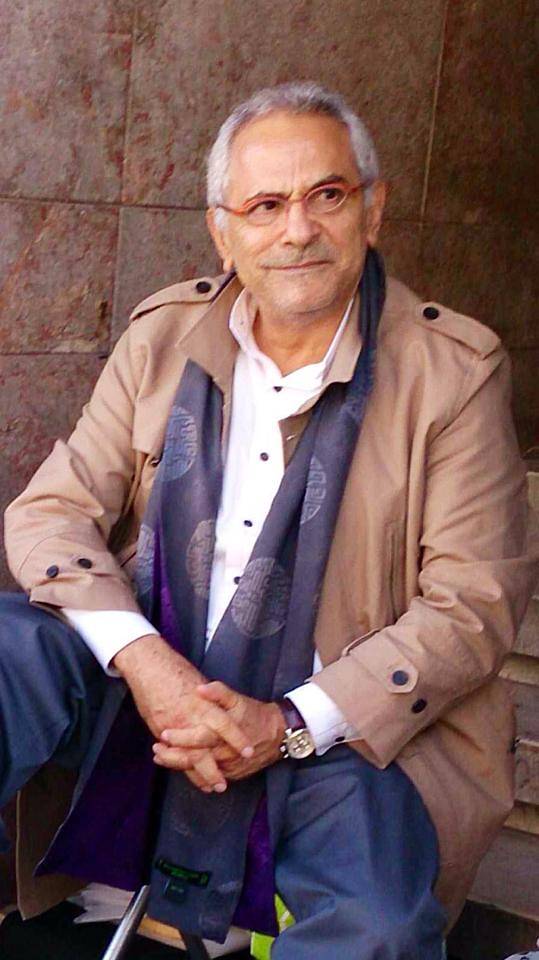
“Every time, any thought came into my mind about giving up, I thought of the common people whom I knew were suffering,” says Jose Ramos-Horta. (Photo: Facebook / Jose Ramos-Horta)
THE HYPOCRISY OF INTERNATIONAL POLITICS
In 1999, following a UN-sponsored act of self-determination, Indonesia relinquished control and East Timor became the first new sovereign state of the 21st century in 2002. It was renamed Timor-Leste, influenced by its Portuguese heritage.
“But for that to benefit us, it didn’t happen just overnight. It took me 24 years of building networks of support particularly in Washington, in the US Congress. Even Portugal and the European Union played a critical role.”
He managed to convince members of the US Congress to terminate military defence cooperation with Indonesia.
“The punitive measures worked,” he says with satisfaction.
As he points out that during the occupation, many of his people were killed by American weapons, I ask him why he thinks it took so long for the international community to come on board.
Immediately after the invasion, the United Nations General Assembly and Security Council passed resolutions condemning it and calling for Indonesia’s immediate withdrawal, but the US continued its cooperation with Indonesia.
“I still remember I arrived in New York in the winter of 1975. I had never seen snow in my life. I spoke at the UN Security Council and it passed a unanimous resolution demanding Indonesia to withdraw from Timor-Leste. That was my first lesson in international hypocrisy because the Americans, the French the British, they all voted on that resolution demanding Indonesian withdrawal, but Indonesia challenged it and continued to occupy East Timor. Not only that, the US kept selling weapons to Indonesia,” he says with palpable frustration.
He admits geo-politics played a huge role, but he eventually managed to find many members of the US Congress who “upheld principles of democracy and integrity” who were willing to “stand up” for his country.
I remark that it’s unfortunate that it took 24 years for this to happen and only when Indonesia saw a leadership change.
But he says he understands that sometimes the tide needs to change in larger ways for the administration to truly take notice.
Today, he has many friends in the US Congress who continue to fight for the rights of the downtrodden including, in today’s context, of immigrants in the US who are being made to feel unwelcome by the current American administration.
Fretilin party supporters participate in an election campaign rally in Dili, East Timor on July 19, 2017. (Photo: AFP/VALENTINO DARIEL SOUSA)
IS THE UN INEFFECTUAL?
Considering his ties to the UN, I wonder how he would assess the body’s effectiveness, noting that even the resolution passed on his country was not enforced.
He admits that the UN has been sidelined on many issues and has failed to take effective action in global conflicts.
“But the UN is made up of member states. It’s up to them how effective the body is. At this time, we are seeing a US administration that seems to be against multilateralism and others may be emasculating it because of rivalries, but eventually I believe we will all come back to the UN because there are no other solutions to the enormous challenges in every field that we face. Extraordinary complex situations require political will and the mobilisation of resources and because these problems are global, they can be tackled only through the collective political will of people and the collective mobilisation of resources and the UN is the only multilateral institution of this kind in existence.”
Yet he was once quoted as saying that he supported the US’ unilateral action in Iraq.
“I was totally misrepresented at the time. In fact, at that time I said that the West needs to give the UN time to try to find a way to resolve the standoff between the US and Saddam Hussein, but I did say that not every intervention is illegal or unacceptable, for instance in the case of the Rwandan genocide, I think the UN should have intervened in a timely manner and if they didn’t someone else should have. I had said that it depends on the situation. If someone were to intervene unilaterally to stop the genocide, would that be wrong?”
GAINING REGIONAL STANDING
Today, while Timor-Leste is a member of the UN, it isn’t yet a member of the Association of Southeast Asian Nations (ASEAN).
“ASEAN countries have had reservations about our membership and those reservations are based on our preparation or capacity to observe the responsibilities as a member of ASEAN in adjusting, adopting laws, regulations such as immigration laws to conform with ASEAN standards. Security, trade, customs are all very, very important. For several years now, there has been a working group assisting Timor-Leste in its preparation to join ASEAN and this taskforce has been headed by Singapore, so we hope it will happen soon.”
He has also taken a keen interest in ASEAN countries such as Myanmar and its Rohingya crisis. I ask him how he feels about ASEAN’s policy of non-interference considering our conversation about unilateralism and multilateralism earlier.
“I would say that ASEAN leaders are doing their best to help in any way they can and while they can’t help politically, there are other ways to help. I would encourage Aung San Suu Kyi to do more reach out to ASEAN countries to get advice on dealing with insurgencies, conflict prevention and mediation.”
He believes that the international community has “unrealistic” expectations of her.
“Myanmar is transitioning from dictatorship and there is overwhelming distrust within the population. Aung San Suu Kyi is trying to handle an extremely delicate situation that she inherited and people expect her to pull out a magic wand and resolve all the problems. But educating the population and dialogue takes time.”
East Timorese ling up to cast their vote in a general election at a polling station in Dili, East Timor, May 12, 2018. (Photo: REUTERS/Lirio Da Fonseca)
DEMOCRATIC CONSOLIDATION
We turn to discussing current issues in his country which, just last month, had its second parliamentary election in less than a year with a coalition of parties led by Xanana Gusmao emerging victorious.
While some reports have put a negative spin on the political state of the country, Mr Ramos-Horta feels otherwise.
“The previous government was not able to function without an absolute majority, so we had another election. We let the people decide again and do so peacefully. It is a great testament to the consolidation of democracy. I’m happy that both elections went without any violence.”
But according to some reports, the campaign was marred by violence.
“Some journalists, because they get bored when nothing happens, even if an accident occurs, they’ll say it’s campaign-related violence. But there was zero violence of a political nature. I was in the country. There were strong emotional debates and accusations but that’s supposed to happen in a democracy. There was no violence and the results were certified by the election commission, consolidated by the Supreme Court and everybody accepted it.
“We have had for 16 years now, peaceful constitutional change of government, no military coups, no takeover by anyone except through free democratic elections.”
However, he apparently takes issue with the way the country has been run since he left office.
In a previous interview, he had said that if he had been prime minister for 10 years, he would have focused all those 10 years on quality education, rural development and water sanitation for the people, something that the Timor-Leste governments so far have not done.
“Yes, on the development side and economic side they have done less well. They have done massive investment in infrastructure, but while that’s needed, you can’t neglect other aspects. Failure in addressing the systemic problems of poverty and basic issues like clean water for communities is worrying.
“This is a problem in many countries – fast growth, fast development that’s fueled by public expenditure, but that does not filter down to communities. But I believe the new government will also learn from past mistakes and change their approach.”
Timor-Leste’s rich oil and gas reserves are also reportedly dwindling and some experts have warned that its economy will be severely affected.
“We are familiar with these dramatic warnings from so-called experts that by 2022 current oil fields will be depleted, but we have invested our revenue over the years in a sovereign fund and we have liquidity. We have at least US$16 billion.”
He also raises Timor-Leste’s recent treaty with Australia on their disputed maritime border and on a “pathway” to develop the giant Greater Sunrise offshore gas fields.
The agreement places much of the Greater Sunrise fields under Timor-Leste’s control and that will “bring billions of dollars to the economy”.
“But we still need to control public expenditure because the billions could run out fast,” he cautions.
While the agreement with Australia has been welcomed, some non-governmental organisations have taken issue with the fact that it stipulates Australia will not compensate Timor-Leste for past exploitation of its oil fields.
“Let’s put the past behind us. Australia also showed wisdom and statesmanship in backing down from past positions that they wouldn’t negotiate with Timor Leste on a permanent maritime boundary. They have backed down, and they have contributed to our development in the last few years too, so we should back down too.”
East Timorese protesters hold a rally demanding a permanent maritime border between East Timor and Australia, in Dili on Mar 22, 2016. (Photo: AFP)
CEDING THE STAGE TO OTHERS
Since leaving office in 2012, I wonder if he has ever thought of returning to politics in his country.
“It’s time to cede the stage to others.”
He says his assignments with the UN have kept him busy enough.
Among his notable assignments were Chair of the High Level Independent Panel on UN Peace Operations tasked to reform the UN peacekeeping architecture and in 2013 and 2014 he served as UN Under-Secretary-General and Special Representative in Guinea-Bissau which was under a military regime. He brought the country through democratic elections.
But his heart clearly lies in Timor-Leste.
“I didn’t do everything well. Sometimes I made mistakes. Sometimes, in my fight for my country, I was rude to people, to some diplomats but they were more diplomatic than I am, so they were patient with me but I don’t recall having wasted or missed an opportunity that was available to me. I knocked on every door possible to bring my country to the attention of the world.”
Today, he is also grateful that he didn’t die that fateful day in 2008.
“I wanted to live to see my country independent and it is now a functioning sovereign democracy.”