US SECRETARY of State Mike Pompeo is expected to touch down in Malaysia today where he is expected to convey President Donald Trump’s commitment to Southeast Asia, amid China’s rising influence in the region.
Malaysia will be the first stop for Pompeo during the Aug 1 and 5 trip before he visits neighbouring Singapore and Indonesia as tensions rise with Beijing over trade and maritime territorial disputes.
During a speech in Washington to business leaders from the region, Pompeo alluded to the US’ bid to assert sovereignty over disputed areas in the South China Sea.
“When we say ‘free’ Indo-Pacific, it means we all want all nations, every nation, to be able to protect their sovereignty from coercion by other countries,” he said, as quoted by the AFP.
“When we say ‘open’ in the Indo-Pacific, it means we want all nations to enjoy open access to seas and airways. We want the peaceful resolution of territorial and maritime disputes,” Pompeo said.
SEE ALSO: Thailand plans regional alternative to Belt and Road
Pompeo’s visit to the three Association of Southeast Asian Nations (Asean) countries also comes at a time when Beijing is pouring billions in loans and investments to the region as part of its Belt and Road economic initiative.
Security and democracy
In Malaysia, Pompeo is scheduled to hold meetings with the country’s newly-elected government led by 93-year-old Dr. Mahathir Mohamad, whose party wrested federal power in a shock election victory in May that saw the downfall Barisan Nasional, the coalition that ruled the country for over 60 years.
The victory also saw the release of former opposition leader Anwar Ibrahim, who Pompeo is also expected to meet during his stay in Kuala Lumpur.
The State Department in citing “our strongly shared democratic values”, said Pompeo will be discussing several security and economic interests during the Malaysian stop.
“He will travel first to Malaysia to discuss strengthening the Comprehensive Partnership and advancing common security and economic interests,” the State Department said.
‘Partnership economics’
Pompeo told attendees of the US Chamber of Commerce on Monday that President Trump’s team will “oppose” China’s effort to dominate the Indo-Pacific through a model of “partnership economics”.
This was part of the US’ plan to provide an alternative to Beijing “predatory” lending to its neighbors.
“The great theme of our engagement is this: Where America goes, we seek partnership, not domination,” Pompeo said.
“The United States of America does not invest for political influence, but rather practices partnership economics.”
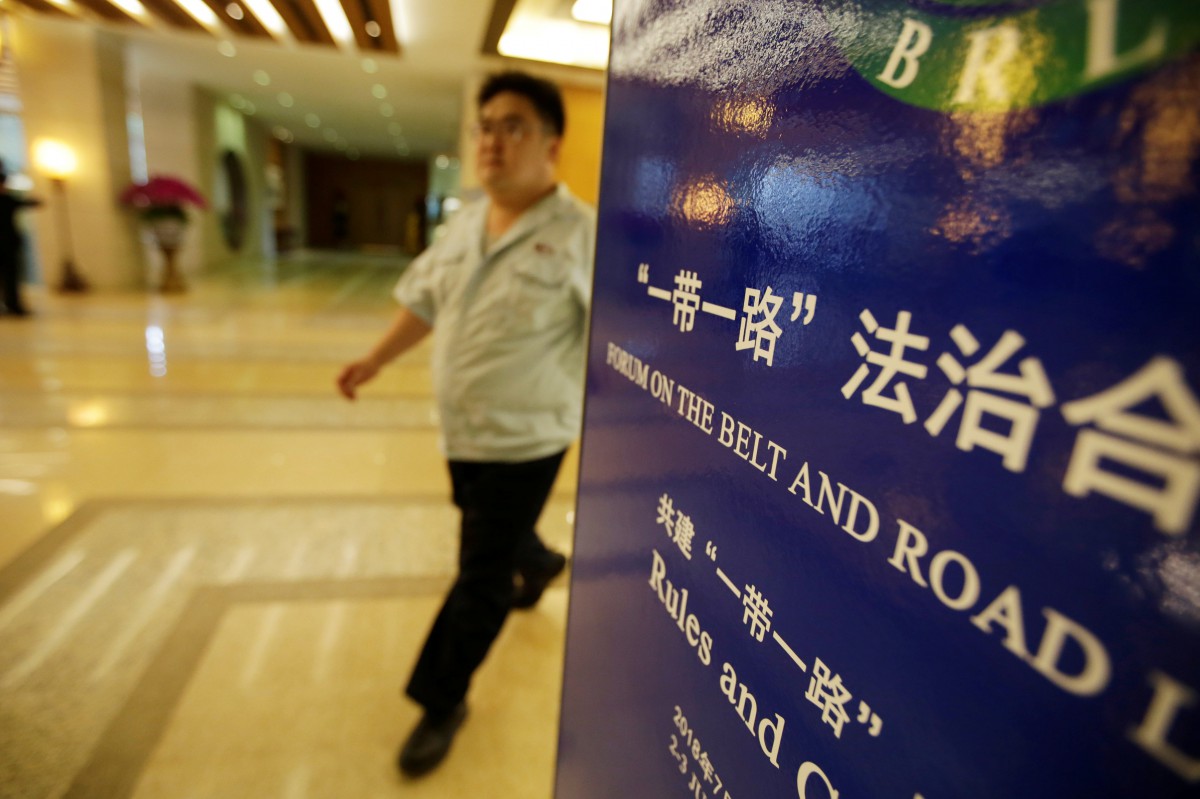
The sign of an international forum on the “Belt and Road” Legal Cooperation is pictured in Beijing, China July 2, 2018. Source: Reuters
At the event, Pompeo announced US$113 million in new technology, energy and infrastructure initiatives, saying Washington wants a “free and open” Asia not dominated by any one country, an apparent reference to China’s growing economic clout, according to Reuters.
SEE ALSO: Kim Jong Un chose potato farm visit over meeting Mike Pompeo
Pompeo sought to define the economic aspect of President Donald Trump’s “Indo-Pacific” strategy, which aims to cast the United States as a trustworthy partner in the region.
“Like so many of our Asian allies and friends, our country fought for its own independence from an empire that expected deference,” Pompeo said.
“We thus have never and will never seek domination in the Indo-Pacific, and we will oppose any country that does.”
“These funds represent just a down payment on a new era in US economic commitment to peace and prosperity in the Indo-Pacific region,” Pompeo said.
US officials said the American strategy does not aim to compete directly with China’s Belt and Road Initiative, which involves dozens of countries in an estimated US$1 trillion of mostly state-led infrastructure projects linking Asia, parts of Africa and Europe, but rather to offer a more sustainable alternative by encouraging private-sector investment.
Critics of Beijing’s Belt and Road Initiative have said it is more about spreading Chinese influence and hooking countries on massive debts. Beijing has said it is simply a development project that any country is welcome to join.
Additional reporting by Reuters