
Singapore’s special educational needs (SEN) landscape has changed over the years, thanks to efforts by the Ministry of Education (MOE) and various voluntary welfare organisations (VWOs) to make special education (Sped) affordable, accessible, and of quality, said Dr Janil Puthucheary.
Also in place are measures to support children with mild SEN in mainstream schools, the Minister of State for Education added.
Against this backdrop, Minister for Education (Schools) Ng Chee Meng announced the inclusion of children with moderate to severe SEN under the Compulsory Education framework yesterday.
This takes effect from the 2019 Primary 1 cohort.
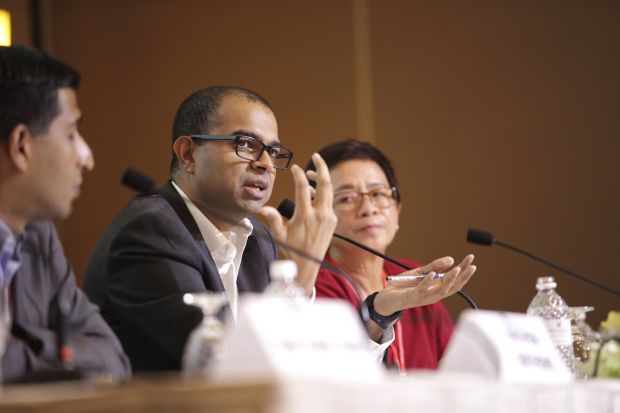
He said: “This is a significant milestone in Singapore’s move towards building a more inclusive society.
“It is heartening to see that, today, the majority of children with SEN are able to access education in mainstream or Sped schools.
“This move is possible with the strong partnership between the community and government.
“MOE will continue to work with the VWOs and parents to ensure that learning opportunities are accessible to all Singaporean children who are able to benefit from them.”
Agreeing, Dr Janil told The New Paper: “We want to make sure that every child benefits from education.
“This is not something to be taken lightly. It’s not a care arrangement, it’s an education arrangement.”
He will be chairing the advisory panel which will ensure that the implementation will best serve the needs of children with SEN.
In every cohort of about 1,770 children with special needs, a quarter have moderate to severe SEN.
Of that, about 40 children do not go to school.
Dr Janil said: “We want to get to know them and the challenges they face. For example, some have medical conditions so severe, they can’t go to school. We want to make sure we can find places for all the 40 children. And to make sure these places are suitable for them.”
Dr Victor Tay, the president of the Association for Persons with Special Needs, said this is a step towards inclusivity. Singapore is tolerant and aware at best, he told TNP.
Mrs Koh Ai Lay, principal of the Cerebral Palsy Alliance Singapore School, agreed and said the move also recognises that Sped schools can provide an education that caters to the specific needs of children with SEN.
She told TNP: “This would act as an impetus for some parents who may not see the need for an education for their child with special needs.
“There could also be parents who may be overwhelmed with family issues and not able to give priority to their child’s education.”
While we have a better supply of skilled Sped teachers through the National Institute of Education today, Dr Tay said that one of the challenges is changing societal perception of teaching in a Sped school.
MNC VS SME
Likening mainstream schools to multinational corporations (MNC) and Sped schools to small- and medium-sized enterprises (SME), he said: “It’s like MNC versus SME. Most would want to work in an MNC.”
The career prospects of teaching in a mainstream school may also differ in a Sped school, said Dr Tay.
Dr Tay said: “A Sped school is a place that’s intensive and manages behavioural challenges rather than intellectually stimulating teaching, and may not necessarily pay the best.
“We need to solve this perception issue, to let people understand that a Sped school is a place that’s missionary, meaningful, and touches lives.
“Therein lies this challenge, to project Sped well, and give the right perception so that it can continue to attract the best and brightest.”
“We want to make sure that every child benefits from education. This is not something to be taken lightly. It’s not a care arrangement, it’s an education arrangement.”
– Minister of State for Education Janil Puthucheary